
The Best Morocco Itinerary for First-Time Visitors
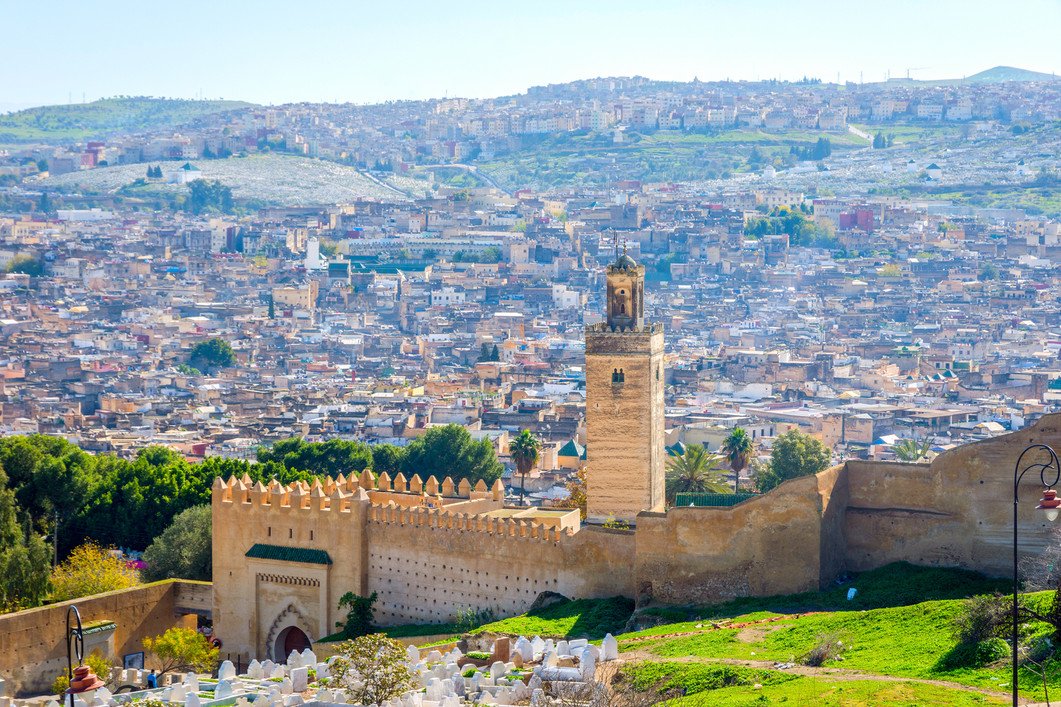
Planning your first trip to Morocco can feel a little overwhelming.
The country is remarkably varied: imperial cities filled with centuries of history, quiet blue mountain towns, sweeping Sahara sand dunes, dramatic rocky gorges, and vibrant bustling souks.
If you are visiting Morocco for the first time, the biggest challenge is rarely deciding what to see—it is figuring out how to connect everything efficiently without spending your entire vacation stuck in a vehicle.
For most first-time visitors, 10 days is an excellent starting point. It gives you enough time to experience Morocco's major highlights—from the northern culture of Chefchaouen and Fes to the desert dunes of Merzouga and the colorful energy of Marrakech—at a manageable, enjoyable pace.
This guide outlines our recommended 10-day Morocco itinerary for first-timers, complete with daily stops, driving expectations, alternatives if you have 7 or 14 days, and practical planning advice from local Moroccan guides.
Morocco Itinerary for First-Time Visitors at a Glance
Here is a quick overview of the classic 10-day route connecting the northern imperial cities with the Sahara Desert and Marrakech:
- Day 1: Arrive in Casablanca → Transfer to Rabat
- Day 2: Rabat → Chefchaouen (The Blue City)
- Day 3: Chefchaouen → Fes
- Day 4: Full Day Exploring Fes Medina
- Day 5: Fes → Ifrane → Middle Atlas Mountains → Merzouga
- Day 6: Merzouga & Sahara Desert → Camel Trek to Desert Camp
- Day 7: Merzouga → Rissani → Todra Gorge → Dades Valley
- Day 8: Dades Valley → Ouarzazate → Aït Ben Haddou → Marrakech
- Day 9: Full Day in Marrakech
- Day 10: Marrakech and Departure
Day 1: Casablanca to Rabat
Welcome to Morocco
Most international long-haul flights land at Mohammed V International Airport (CMN) in Casablanca. As Morocco's economic capital and largest commercial gateway, Casablanca offers modern transit infrastructure.
If your flight arrives in the morning or early afternoon, your first stop should be the monumental Hassan II Mosque. Perched dramatically over the Atlantic Ocean, it is one of the largest mosques in the world and one of the few active religious buildings in Morocco open to non-Muslim visitors on guided interior tours. Its 210-meter minaret and intricate hand-carved marble, cedar wood, and zellige tilework provide an unforgettable introduction to Moroccan craftsmanship.
Explore Rabat
After visiting the mosque, make the comfortable 1-hour drive north along the modern coastal highway to Rabat, Morocco's administrative capital and a UNESCO World Heritage site.
Rabat is a calm, coastal city with wide palm-lined boulevards and rich historic landmarks. Key sights to explore before evening include:
- Kasbah of the Udayas: A picturesque 12th-century fortress perched at the mouth of the Bou Regreg River, with white-and-blue residential lanes, the Andalusian Gardens, and sweeping ocean views.
- Hassan Tower & Mausoleum of Mohammed V: The unfinished 12th-century red sandstone minaret standing among 200 ancient stone columns, alongside the exquisitely decorated modern royal tomb.
- Chellah: An ancient Roman settlement (Sala Colonia) turned medieval Marinid royal necropolis, surrounded by fortified battlements and quiet gardens.
Spend your first night in an authentic, tranquil riad inside Rabat's historic medina.
Day 2: Rabat to Chefchaouen
What to Do in Chefchaouen
Depart Rabat in the morning and travel northeast toward the Rif Mountains. As the landscape shifts from coastal plains to rolling green foothills and rugged peaks, you arrive in Chefchaouen, famously known across the world as the "Blue Pearl" of Morocco.
Chefchaouen was founded in 1471 as a small fortress by Moulay Ali Ben Rachid to defend against Portuguese invasions, and later expanded by Andalusian Muslim and Jewish refugees. The medina's distinctive powder-blue, cobalt, and indigo-washed walls create one of the most visually enchanting walking environments in North Africa.
Top highlights for your day in Chefchaouen include:
- Wandering the Blue Medina: Getting pleasantly lost through the winding, photogenic alleys of the Al-Andalus and Souika quarters.
- Plaza Uta el-Hammam: The central paved square lined with shaded cafés, restaurants, and the 15th-century red-walled Kasbah fortress and museum.
- Ras El-Maa Waterfall: The fresh mountain spring on the eastern edge of the medina where local women still wash carpets and citrus trees shade riverside tea spots.
- Sunset at the Spanish Mosque: A gentle 15-minute uphill walk to the hilltop Bouzaafar mosque overlooking the entire blue town as the evening call to prayer echoes across the valley.
Enjoy dinner featuring northern Moroccan specialties such as goat cheese drizzled with wild honey and slow-cooked lamb tagines, followed by a restful night in a blue-accented mountain riad.
Day 3: Chefchaouen to Fes
Depart the Rif Mountains and head south toward Fes. Along the way, the scenic route passes agricultural valleys, olive groves, and the ancient Roman ruins of Volubilis near Meknes. Volubilis showcases remarkably preserved floor mosaics, the Arch of Caracalla, and Roman columns standing amid wildflower meadows.
Arrive in Fes by mid-to-late afternoon. Check into your traditional riad nestled deep inside the medieval medina, where quiet courtyards with tiled fountains and soaring carved cedar ceilings offer a peaceful sanctuary from the bustling alleys.
Day 4: Full Day Exploring Fes
What to See in Fes
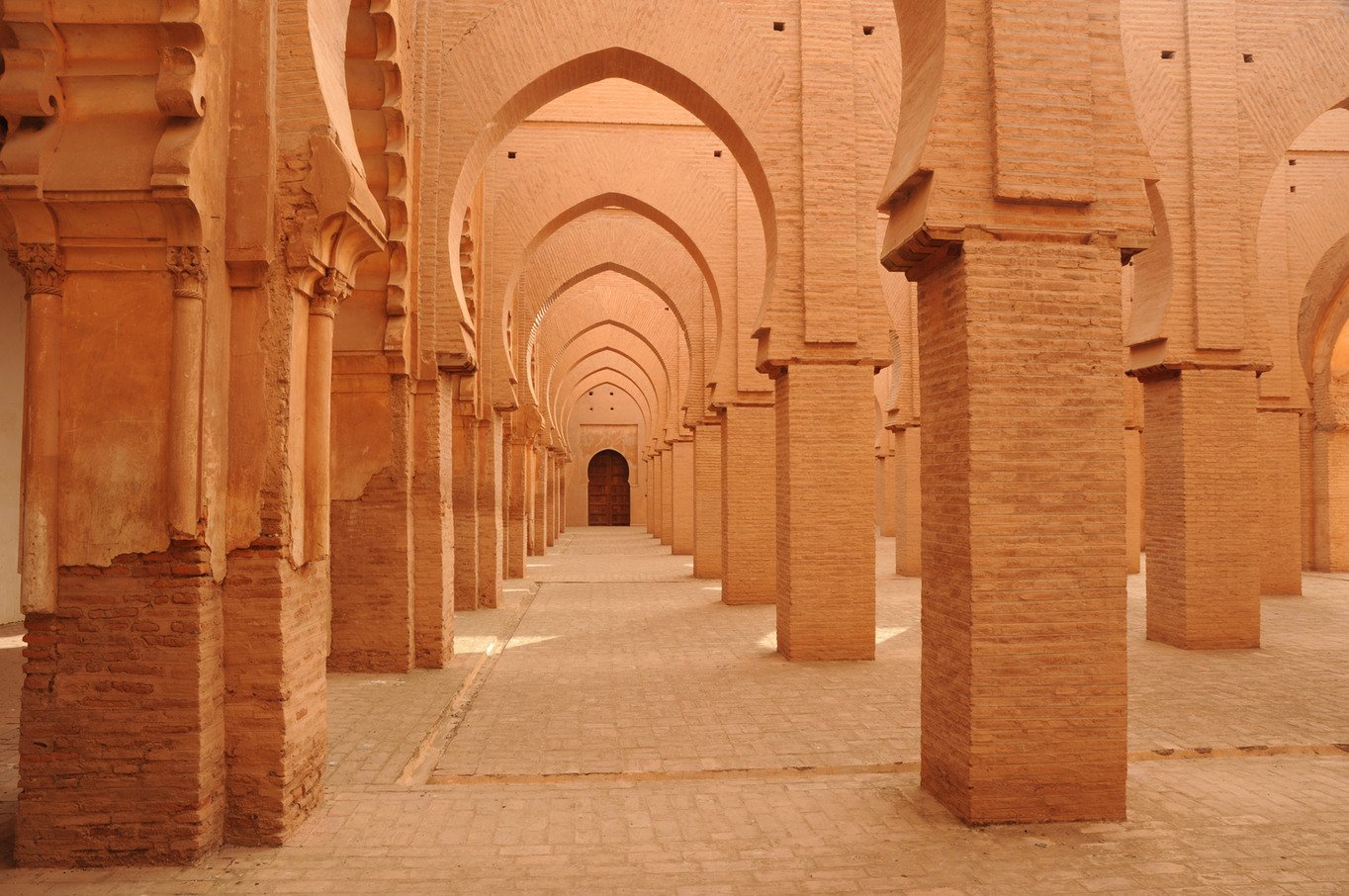
Fes is Morocco's spiritual, intellectual, and cultural capital. Its old walled city, Fes el-Bali, was founded in the 8th century and is the largest car-free urban area in the world, with over 9,000 labyrinthine pedestrian lanes.
We strongly recommend exploring Fes el-Bali with a licensed local city guide who can navigate the complex maze while sharing the living history of the neighborhoods.
Essential sights during your full day in Fes include:
- Bab Bou Jeloud (The Blue Gate): The grand triple-arched ceremonial entrance adorned with vibrant blue zellige tilework on the exterior and green on the interior.
- Al-Qarawiyyin University and Mosque: Founded in 859 AD by Fatima al-Fihri, recognized by UNESCO and the Guinness World Records as the oldest continuously operating university in the world.
- Bou Inania and Al-Attarine Madrasas: 14th-century Islamic colleges featuring breathtaking examples of Marinid decorative arts, intricate stucco plasterwork, carved cedar, and geometric tile mosaics.
- Chouara Tanneries: The iconic open-air 11th-century leather tanneries, where workers cure and dye leather hides in massive stone vats using natural pigments like saffron, poppy, and indigo.
- Nejjarine Museum of Wooden Arts & Crafts: Housed in a beautifully restored 18th-century caravanserai (funduq) with an ornate fountain in the square outside.
- The Jewish Quarter (Mellah) & Royal Palace Gates: The 14th-century Jewish neighborhood with distinctive overhanging wooden balconies and the seven monumental brass doors of Dar al-Makhzen.
In the late afternoon, enjoy a panoramic view of the ancient medina from the Marinid Tombs on the northern hill before enjoying an authentic Fassi dinner.
Day 5: Fes to Merzouga and the Sahara
This is one of the most geographically diverse and dramatic travel days in Morocco. Leaving Fes, you travel south, climbing through changing climate zones from cedar forests to desert plateaus.
Ifrane
Your first stop is Ifrane, often called the "Switzerland of Morocco." Situated at 1,665 meters altitude in the Middle Atlas, it features alpine-style pitched roofs, clean parks, cool mountain air, and a prominent stone lion sculpture.
Middle Atlas Mountains
Continuing through the cedar forests of Azrou, you will often spot wild Barbary macaque monkeys among ancient cedar trees. The route then crosses the Col du Zad pass before descending through Midelt, an apple-growing town nestled between the Middle Atlas and High Atlas ranges.
Ziz Valley
After passing the High Atlas via the Tunnel du Légionnaire and Er-Rachidia, the road winds along the dramatic Ziz Gorge and Ziz Valley. Here, an immense green river of over a million date palms cuts through red canyon walls—one of Morocco's most breathtaking desert oasis vistas.
Passing Erfoud, known for its prehistoric marine fossils and annual date festival, you reach the edge of the Sahara Desert in Merzouga by late afternoon.
Day 6: Merzouga and the Sahara Desert
Explore Around Merzouga
Spend the morning discovering the fascinating desert culture around Erg Chebbi:
- Visit the village of Khamlia to listen to traditional spiritual Gnawa music performed by descendants of formerly enslaved sub-Saharan Africans.
- Explore the old French-era lead mines of M'Fis and meet nomadic Berber families living in traditional tent settlements across the black hamada desert.
- Walk through a lush desert oasis to see how traditional gravity-fed irrigation channels (khettaras) sustain palm agriculture beneath towering dunes.
Camel Trek Into Erg Chebbi
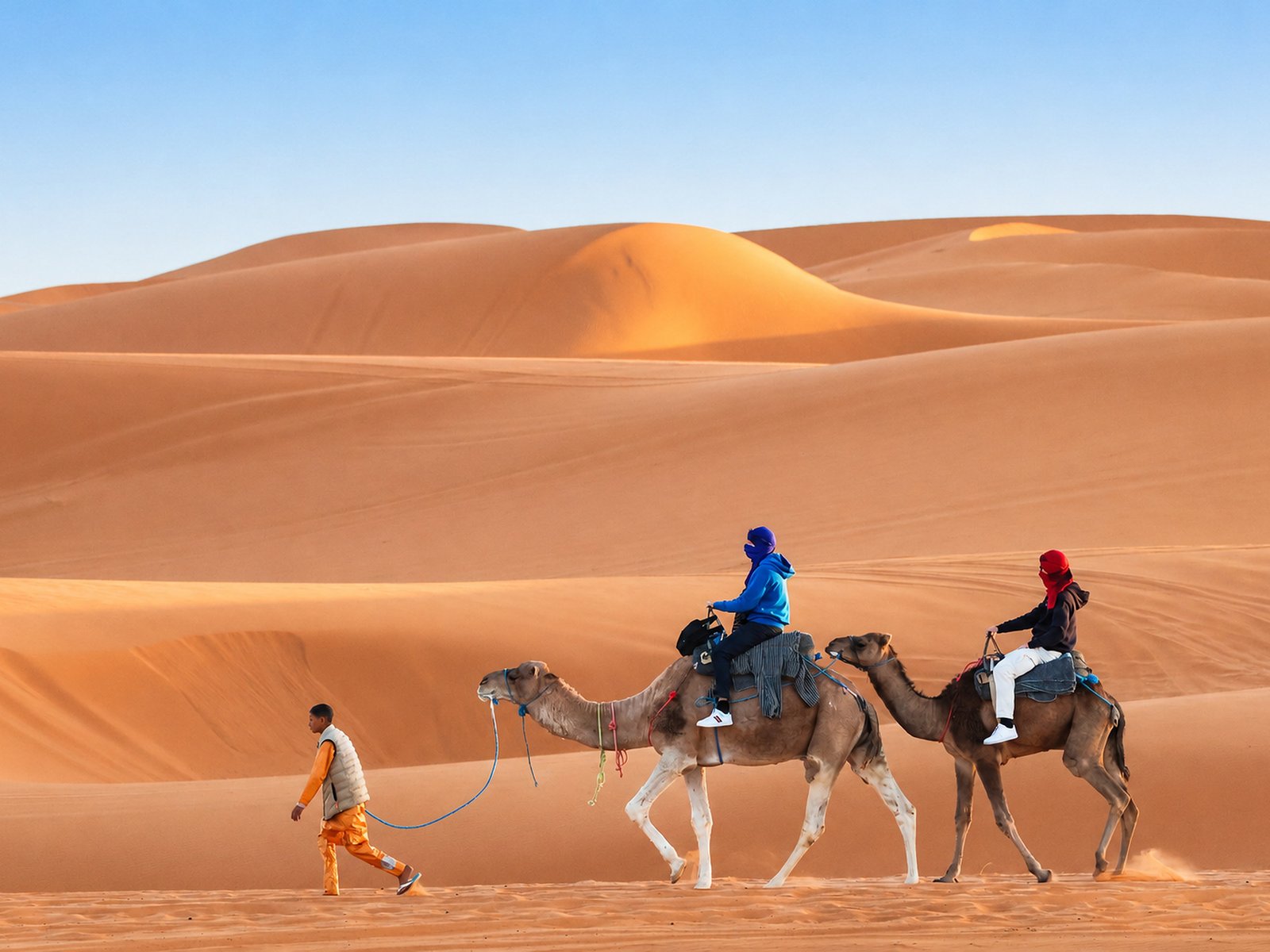
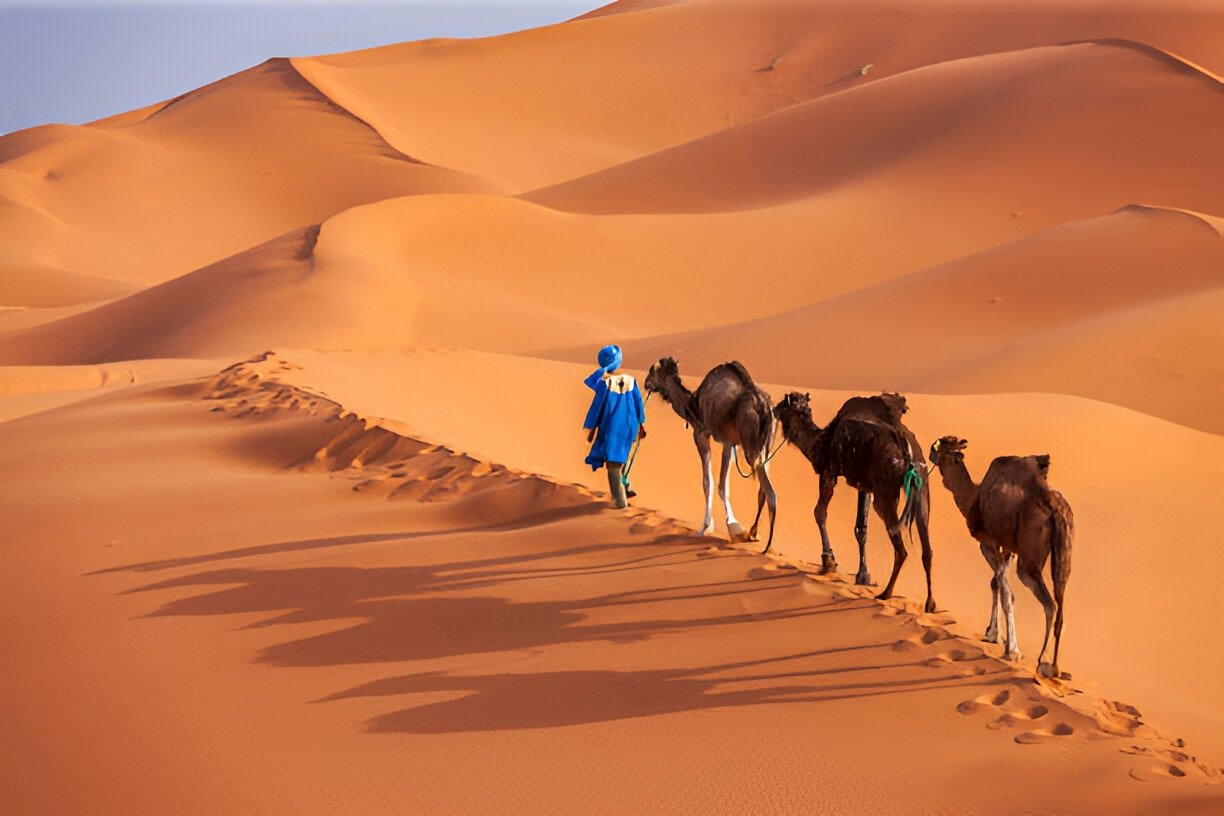
In the late afternoon, pack a small overnight bag and meet your camel caravan at the edge of the dunes. Mount your camel for an unforgettable 1- to 1.5-hour trek across the glowing orange sands of Erg Chebbi, which rise up to 150 meters high. As the sun sinks below the horizon, the shifting colors of the dunes transform from bright apricot to deep crimson and violet.
Night in a Sahara Desert Camp
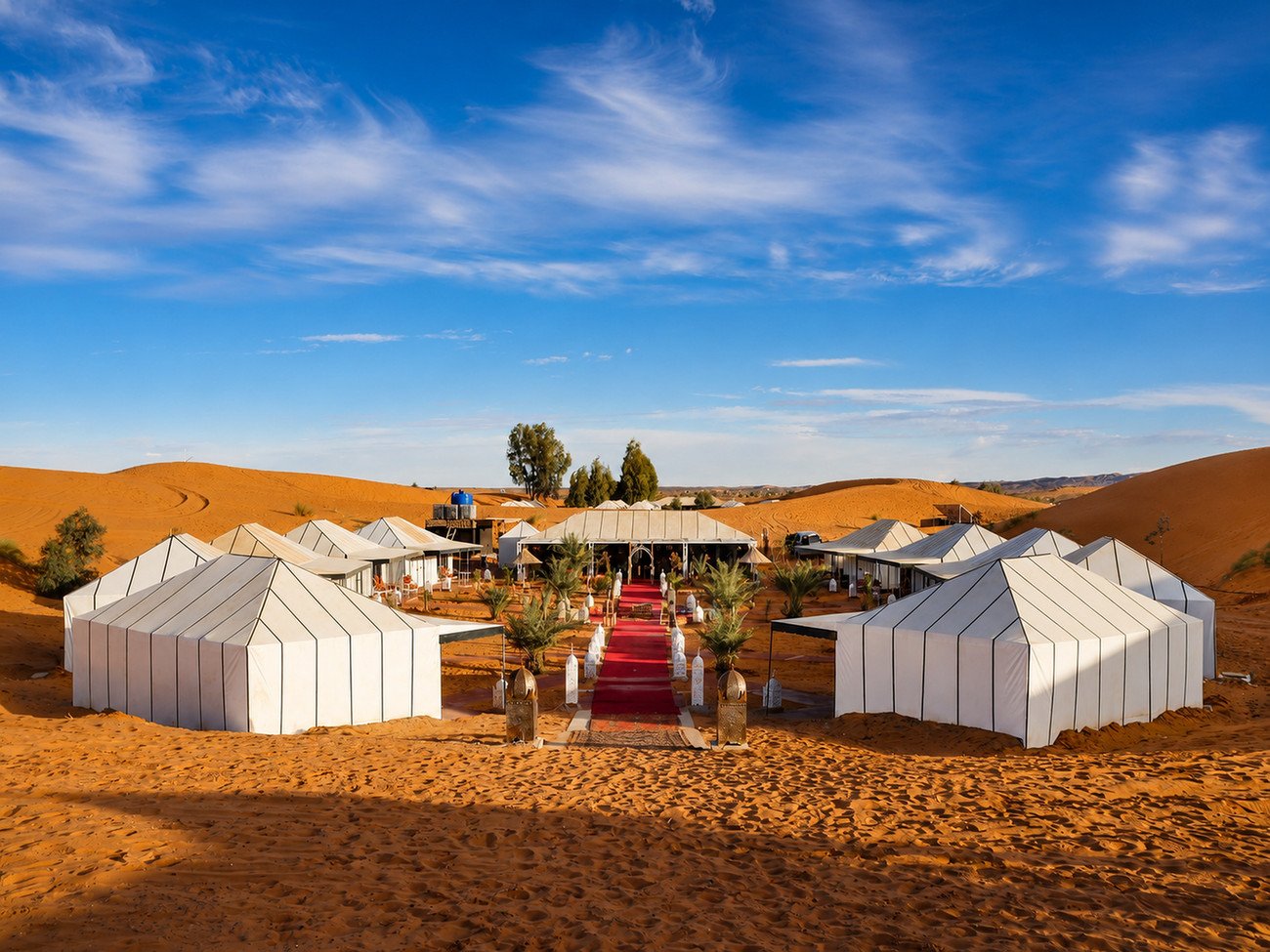
Arrive at your secluded desert camp tucked among the dunes. Modern comfort desert camps feature private canvas tents with comfortable beds, en-suite bathrooms, hot showers, and hand-woven Berber carpets.
After a freshly cooked Moroccan tagine dinner under the open sky, gather around a crackling campfire to listen to traditional Berber drum rhythms (tam-tam) and songs under a brilliant canopy of Saharan stars.
Day 7: Merzouga to Dades Valley
Wake early to climb a nearby dune and witness the magnificent sunrise illuminating the Sahara. After a desert breakfast at camp, return from the dunes and begin the journey westward along the historic Road of a Thousand Kasbahs.
Rissani
Stop first in Rissani, the ancient seat of the ruling Alaouite Dynasty and historic terminus of the trans-Saharan camel trade routes. Visit the vibrant traditional souk, famous for donkey parking lots, local spices, desert herbs, and medfouna (savory Berber stuffed pizza).
Todra Gorge
Continue toward Tinghir and drive into the spectacular Todra Gorge. Here, towering vertical limestone cliffs narrow down to a 10-meter gap while soaring over 300 meters high. A crystal-clear mountain stream flows through the gorge floor, where local nomads bring goats to water and rock climbers scale sheer canyon walls.
Dades Valley
Continue into the Dades Valley, known as the Valley of a Thousand Kasbahs. The landscape features dramatic geological formations such as the "Monkey Fingers" rock cliffs and winding switchback roads climbing high above the fertile valley floor.
Spend the night in a scenic boutique kasbah hotel overlooking the red canyon walls of Dades.
Day 8: Dades Valley to Marrakech
Valley of Roses
Depart Dades Valley and travel west through Kelaat M'Gouna in the Valley of Roses, famous for fragrant Persian Damascus roses harvested every spring for rosewater, oils, and cosmetics.
Ouarzazate
Pass through the vast palm groves of Skoura and arrive in Ouarzazate, Morocco's film capital. Here, visit the impressive 17th-century Kasbah Taourirt and Atlas Film Studios, where iconic movies including Gladiator, Kingdom of Heaven, Lawrence of Arabia, and The Mummy were filmed.
Aït Ben Haddou
A short drive further brings you to the world-famous ksar of Aït Ben Haddou. This UNESCO World Heritage site is the most striking and best-preserved fortified earthen village in Morocco. Perched on a hillside overlooking the Ounila River, its red mud-brick towers, defensive ramparts, and intricate clay motifs have served as the backdrop for dozens of Hollywood films and television series.
Cross the riverbed on foot to wander through the ancient alleyways up to the hilltop granary (agadir) for panoramic views of the Atlas foothills.
Cross the High Atlas to Marrakech
From Aït Ben Haddou, the route climbs into the High Atlas Mountains, traversing the dramatic Tizi n'Tichka Pass at an elevation of 2,260 meters (7,415 feet). The mountain highway winds past traditional Berber villages built into steep hillsides, offering jaw-dropping views of alpine peaks and terraced valleys.
Descend from the Atlas Mountains and arrive in vibrant Marrakech by late afternoon or early evening. Check into your medina riad.
Day 9: Full Day in Marrakech
What to See in Marrakech
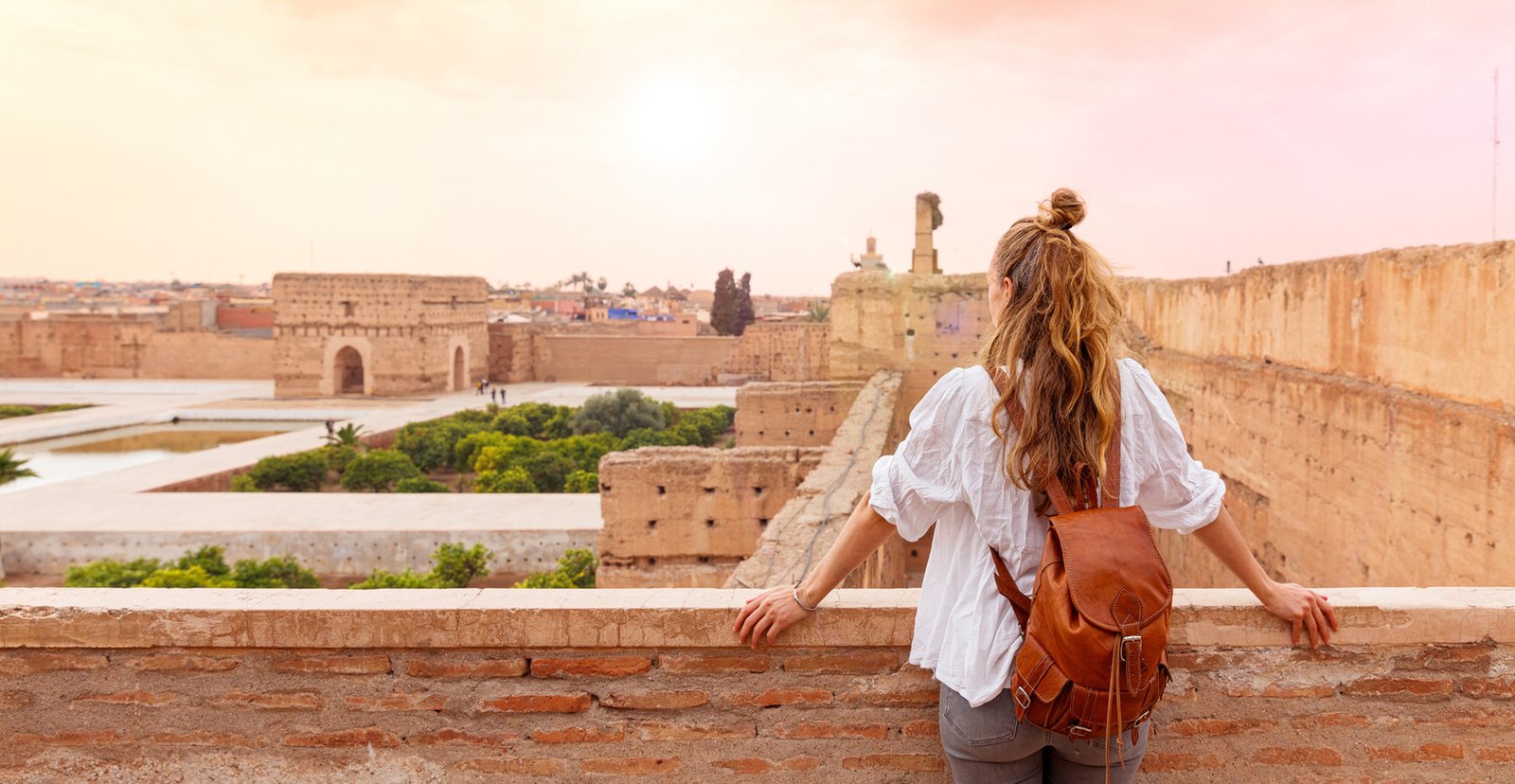
Marrakech, known as the "Red City" for its distinctive rose-ochre clay ramparts, is the sensory epicenter of southern Morocco.
Dedicate your full day to exploring its major historical landmarks:
- Bahia Palace: A masterwork of 19th-century Moroccan and Islamic architecture featuring 150 lavishly decorated rooms, painted cedar ceilings, zellige courtyards, and fragrant citrus gardens.
- Koutoubia Mosque: The 12th-century Almohad minaret that towers 77 meters above the medina and serves as Marrakech's iconic landmark.
- Saadian Tombs: The sealed 16th-century royal mausoleum discovered in 1917, featuring Italian Carrara marble columns and honeycomb muqarnas ceilings in the Chamber of the Twelve Pillars.
- Jardin Majorelle & Yves Saint Laurent Museum: The stunning cobalt-blue botanical garden created by French painter Jacques Majorelle and later restored by fashion designer Yves Saint Laurent, filled with towering exotic cacti and bamboo groves.
Explore the Souks
Spend the afternoon wandering through the labyrinth of artisanal souks in Marrakech's medina:
- Souk Semmarine & Souk el Kebir: Leather goods, handmade footwear (babouches), brass lanterns, and woven textiles.
- Souk des Teinturiers: The dyers' souk where freshly dyed hanks of wool and silk hang overhead to dry in vibrant rainbow hues.
- Souk des Épices: Rahba Kedima square, filled with fragrant pyramids of cumin, saffron, ras el hanout, argan oil, and natural cosmetic minerals.
Evening at Jemaa el-Fna
As dusk settles, head to Jemaa el-Fna, Marrakech's world-famous main square recognized by UNESCO as Masterpiece of the Oral and Intangible Heritage of Humanity.
Watch the square transform from an open plaza into a massive open-air spectacle: snake charmers, storytellers, Gnawa musicians, henna artists, and dozens of sizzling open-air food stalls grilling fresh skewers, sausages, and serving steaming bowls of spiced snail broth. Grab a table on a high rooftop café to watch the lively spectacle unfold beneath the glowing Koutoubia minaret.
Day 10: Marrakech and Departure
Depending on your flight schedule, spend your final morning enjoying a relaxing breakfast on your riad rooftop, doing last-minute shopping in the souks, or unwinding with a traditional Moroccan hammam and scrub experience.
Transfer directly to Marrakech Menara Airport (RAK) for your flight home, or take the 2.5-hour train or private transfer back to Casablanca (CMN) for international connections.
Have More Than 10 Days in Morocco?
If you have 12, 14, or 15 days to spend in Morocco, you can expand this core route without rushing:
Add Essaouira
Add 2 nights in Essaouira, a laid-back UNESCO-listed Atlantic coastal town just 2.5 hours west of Marrakech. Enjoy fresh grilled seafood straight from the active fishing harbor, walk along 18th-century Portuguese sea ramparts (Sqala du Port), watch kitesurfers on the windy sandy beach, and explore relaxed, art-filled medina lanes.
Add More Time in Marrakech
Spend an extra full day in Marrakech to take a Moroccan cooking workshop, visit modern contemporary art galleries in the Guéliz district, or take a day trip to the Ourika Valley in the High Atlas foothills.
Spend Another Night in the Sahara
Adding a second night in the Merzouga desert allows you to slow down, enjoy a full day of desert exploration, try sandboarding, or spend time walking quietly through serene dune landscapes away from travel schedules.
Add More Time in Chefchaouen
Stay two full nights in Chefchaouen to hike to the nearby Akchour Waterfalls and Bridge of God in Talassemtane National Park.
What If You Only Have 7 Days in Morocco?
If you only have one week, attempting to cover both northern Morocco (Chefchaouen, Fes) and the southern Sahara Desert (Merzouga, Dades, Marrakech) results in exhausting, rushed driving days.
Instead, we recommend choosing one of two focused 7-day routes:
Option 1: Imperial Cities and Northern Morocco
- Route: Casablanca → Rabat → Chefchaouen → Fes → Marrakech
- Best for: History lovers, architecture enthusiasts, and travelers who prefer cultural medinas and shorter transfer times over long desert drives.
Option 2: Marrakech and the Sahara
- Route: Marrakech → Aït Ben Haddou → Dades Valley → Merzouga & Erg Chebbi Desert Camp → Todra Gorge → Marrakech
- Best for: Travelers whose primary dream is riding camels into the Sahara dunes, sleeping under the stars, and exploring dramatic mountain kasbahs and gorges.
Explore our dedicated 3-Day Marrakech to Merzouga Guided Desert Tour or 7-Day Morocco Imperial Cities Guided Tour for detailed route breakdowns.
Is 10 Days Enough for Morocco?
Yes, 10 days is the ideal duration for a first trip to Morocco. It provides a balanced loop that links the Mediterranean/Rif north, the medieval heart of Fes, the majestic Sahara Desert, and the vibrant southern oasis of Marrakech without feeling like a continuous race from hotel to hotel.
Should First-Time Visitors Take a Private Morocco Tour?
Independent travel across Morocco by train and bus is entirely possible between major cities like Casablanca, Rabat, Fes, and Marrakech.
However, the most spectacular highlights of Morocco—such as the High Atlas mountain passes, the Dades and Todra Gorges, the fortress of Aït Ben Haddou, and the remote sand dunes of Merzouga—have very limited public transportation connections.
Booking a private guided tour with a dedicated local driver-guide provides several distinct advantages for first-time visitors:
- Zero Transportation Stress: No navigating aggressive urban traffic, winding mountain roads, or negotiating taxi fares.
- Customized Pacing: See a beautiful viewpoint? We stop. Want coffee? We stop. Need a break? We stop. Want more time at Aït Ben Haddou? The itinerary can often be adjusted.
- Authentic Local Insight: Learn directly from a local Moroccan guide about Berber culture, history, language, and customs throughout every hour of the journey.
- Door-to-Door Service: Seamless transfers directly between medina riads, desert camps, and airport terminals.
To compare travel options in depth, read our full guide on Private Tours vs. Group Tours in Morocco.
When Is the Best Time for a First Trip to Morocco?
Morocco is a year-round destination, but different seasons offer distinct advantages:
Spring
March through May brings pleasant daytime temperatures (20°C–26°C / 68°F–78°F), blooming wildflowers across the valleys, snow-capped Atlas mountain peaks, and ideal conditions for desert camel treks.
Autumn
September through November offers warm, comfortable weather throughout the country, clear sunny skies, and pleasant temperatures for exploring medinas and the Sahara.
Winter
December through February brings crisp, clear days with cool evenings. While nights in the Sahara and Atlas Mountains can drop near freezing, daytime temperatures in Marrakech and the south remain mild and sunny.
Summer
June through August brings intense heat to the interior and desert regions, where temperatures regularly exceed 40°C (104°F). If visiting in summer, focus on coastal towns like Essaouira and Tangier or high-altitude Atlas villages.
For a month-by-month breakdown, see our complete guide on the Best Time to Visit Morocco.
What Should First-Time Visitors Pack for Morocco?
Packing for Morocco requires versatile layers to accommodate varying cultural norms and changing regional climates:
- Modest, Breathable Clothing: Lightweight linen shirts, long pants, maxi dresses, and skirts covering shoulders and knees for medina walking.
- Comfortable Walking Shoes: Sturdy sneakers or walking shoes with good grip for navigating uneven cobblestones and steep medina steps.
- Warm Layers: A fleece jacket or warm sweater for cool desert nights and high mountain passes.
- Sun Protection: Wide-brim hat, high-SPF sunscreen, and UV-blocking sunglasses.
- Scarf or Shesh: A lightweight cotton scarf to protect your face and hair from blowing desert sand during camel treks.
- Universal Adapter & Power Bank: Type C and E European-style two-pin round plugs are standard across Morocco.
For the desert portion of your journey, see our complete guide: What to Pack for a Sahara Desert Tour in Morocco.
First-Time Morocco Travel Tips From a Local Guide
As Moroccan local guides who welcome travelers every week, here are our top tips for a smooth, memorable first visit:
Don't Try to See Everything
Morocco is larger and more mountainous than many first-timers realize. Trying to squeeze too many destinations into a single week leads to burnout. Prioritize quality time in fewer places over checking boxes.
Stay in Riads
Whenever possible, choose historic riads inside the pedestrian medinas rather than modern international chain hotels in outlying suburbs. Riads offer intimate hospitality, homemade Moroccan breakfasts, and genuine architectural charm.
Use Local Guides in the Medinas
The medinas of Fes and Marrakech are living medieval cities with thousands of winding alleys. Hiring an official licensed local guide on your first morning helps you understand the history, find hidden artisan workshops, and explore with confidence.
Expect Driving Days
Reaching the Sahara Desert requires significant driving across the High and Middle Atlas mountain ranges. Break up long travel stretches with scenic stops in the Ziz Valley, Todra Gorge, and Berber villages.
Leave Some Space in the Schedule
Some of the best moments in Morocco happen without a plan: lingering over a glass of hot mint tea with a shopkeeper, listening to musicians in a courtyard, or watching the sunset over a mountain pass.
Our Favorite Morocco Itinerary for First-Time Visitors
This 10-day itinerary brings together the full spectrum of Morocco: ancient Roman ruins, the peaceful blue alleys of Chefchaouen, the intellectual heritage of Fes, the quiet grandeur of the Sahara Desert, the dramatic red rock canyons of Dades, and the intoxicating energy of Marrakech.
Experience this complete route on our handcrafted 10-Day Morocco Grand Guided Tour.
Your Morocco Trip Doesn't Have to Be One Size Fits All
Every traveler is unique. Whether you are traveling as a couple celebrating an anniversary, a family with young children, a group of photography enthusiasts, or solo adventurers, your itinerary can be customized to match your exact dates, interests, and preferred travel pace.
Plan Your First Morocco Trip With Morocco Guided Tours
Planning your first trip to Morocco? Contact Morocco Guided Tours and let us create a private Morocco itinerary designed around you.
Recommended Tours for this Route
3-Day Marrakech to Merzouga Guided Desert Tour
Cross the High Atlas Mountains, explore ancient kasbahs, and sleep under the Saharan stars.

7-Day Morocco Imperial Cities Guided Tour
Discover Morocco’s imperial cities on a 7-day journey beginning and ending in Casablanca.

10-Day Morocco Grand Guided Tour
The ultimate guided 10-day journey from Casablanca to Marrakech via Chefchaouen, Fes, Merzouga Sahara, and High Atlas.
Ready to Experience Morocco First-Hand?
Let our local guides craft a personalized tour around your travel schedule and interests.
More Morocco Travel Articles

How Many Days Do You Need in Morocco?
Discover how many days you need in Morocco, with itinerary ideas for 7 days, 10 days, 2 weeks and 3 weeks, plus practical trip planning tips.
Private Tours vs. Group Tours in Morocco: Which Is Right for You?
Private tour or group tour in Morocco? A local Moroccan guide explains the pros, cons, costs, flexibility, comfort, and which option is best for your trip.
Understanding Moroccan Culture, Tipping, and Local Customs
Practical advice on dress etiquette, photography, haggling in souks, and tipping standards.