What to Pack for a Sahara Desert Tour in Morocco
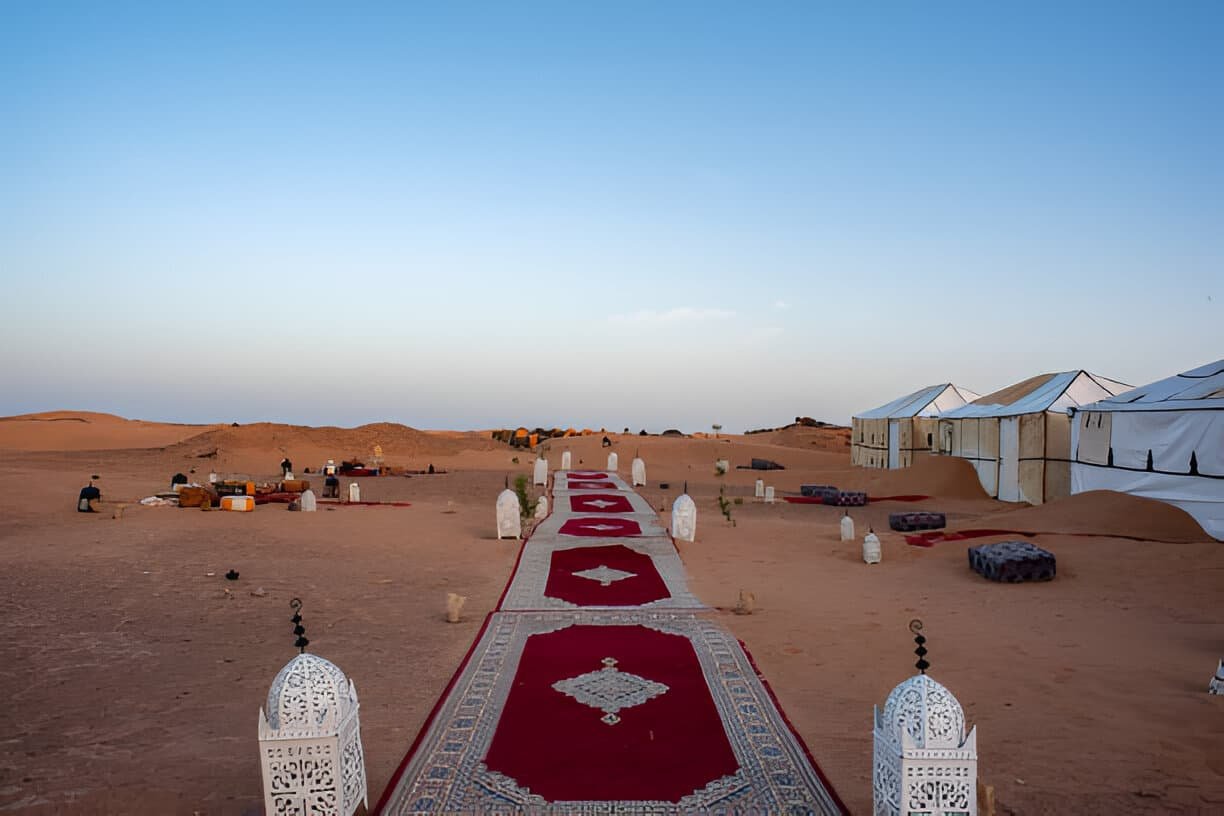
You booked your Morocco desert tour. The route is planned, the dunes are waiting, and now there’s one question left: what should you actually pack for the Sahara?
A trip into the Moroccan desert isn’t quite like packing for a normal city break. During the day, you may be dealing with intense sunshine, dry air, and sand. After sunset, temperatures can drop surprisingly quickly. Add camel rides, 4x4 transfers, desert camps, and limited luggage space, and suddenly what you bring matters a lot more.
The good news is that you don’t need an enormous suitcase.
You just need to pack smart.
Whether you're heading to Merzouga and the Erg Chebbi dunes, exploring Zagora, or traveling deeper toward the desert landscapes of southern Morocco, this guide covers what to pack for a Sahara Desert tour.
But First…
Before getting into clothes, shoes, toiletries, and luggage, there are a few things you really don’t want to leave behind.
The Desert “Show Stoppers”
Keep these somewhere safe and easy to reach:
- Passport
- Phone
- Wallet, cash, and bank cards
- Travel documents and accommodation details
- Any essential medication
- Travel insurance information
- Portable phone charger or power bank
Most forgotten toiletries or clothing items can be replaced somewhere along the journey.
Replacing your passport in the middle of a Morocco itinerary is considerably less fun.
It’s also worth downloading your hotel, riad, tour-company, and driver information before leaving an area with reliable internet access.
Pack Light
One of the easiest mistakes to make is bringing too much.
For most Sahara tours, especially trips involving a camel trek or an overnight desert camp, a smaller bag is much easier to manage than a huge suitcase.
You’ll probably wear several items more than once anyway.
Instead of packing a completely different outfit for every day, focus on lightweight pieces that can be layered.
A simple desert wardrobe might include:
- 3–5 lightweight shirts or T-shirts
- 1–2 long-sleeved shirts
- 2–3 pairs of lightweight trousers
- Underwear and socks for each day
- One warm layer
- One light jacket
- Sleepwear
- A scarf or head covering
If your Morocco trip continues for several weeks, plan around laundry rather than trying to carry enough clothes for the entire journey.
Packing Cubes
Packing cubes are particularly useful on desert trips.
They keep your clothes organized, help separate clean items from dusty ones, and prevent you from having to empty your entire bag every time you need something.
Consider dividing your luggage into:
- Everyday clothing
- Underwear and socks
- Warm layers
- Toiletries
- Electronics
- Desert-camp essentials
You can also carry a separate bag for dirty or sandy clothes.
After a day around the dunes, you'll probably appreciate it.
Time of Year
The season should heavily influence what you pack for the Sahara Desert.
Many travelers imagine the desert as permanently hot, but temperatures can vary dramatically between daytime and nighttime.
Spring and Autumn
These are among the most comfortable periods for desert travel.
Bring lightweight clothing for the daytime but keep a sweater, fleece, or light jacket available for mornings and evenings.
Summer
Summer temperatures in the desert can become extremely hot.
Loose, breathable clothing that covers your skin is usually more practical than very short clothing.
Prioritize:
- Lightweight long sleeves
- Loose trousers
- Sun hat
- Sunglasses
- High-SPF sunscreen
- Refillable water bottle
Winter
Winter days can still be pleasant in the sun, but desert nights can feel genuinely cold.
Bring warmer layers such as:
- Fleece or sweater
- Warm jacket
- Long trousers
- Warm socks
- Scarf
- Sleepwear suitable for colder nights
If you're staying in a desert camp, ask your tour provider what bedding and heating arrangements are available.
What Clothes Should You Wear in the Sahara?
Think in terms of sun protection, comfort, and layers.
Loose clothing is often more comfortable than tight clothing in hot, dry conditions.
Long sleeves and trousers also help protect you from both the sun and blowing sand.
Good options include:
- Breathable cotton or moisture-wicking shirts
- Lightweight long-sleeved tops
- Loose trousers
- Lightweight hiking trousers
- Comfortable T-shirts
- Fleece or sweater
- Light wind-resistant jacket
Try to avoid building your entire desert wardrobe around heavy denim. Jeans can work, particularly during cooler months, but lightweight trousers are generally easier for long drives, walking, and camel rides.
Bring a Scarf
A scarf may end up being one of the most useful things in your bag.
A traditional Moroccan cheche or similar large scarf can help protect your:
- Head
- Neck
- Face
- Mouth
It can be particularly useful if the wind picks up and starts blowing sand around.
You don't necessarily need to buy one before arriving. Scarves are widely available in towns near popular desert routes and can also make a practical souvenir.
Toiletries
You don’t need to bring your entire bathroom cabinet into the Sahara, but a compact toiletry kit makes life easier.
Consider packing:
- Toothbrush and toothpaste
- Deodorant
- Moisturizer
- Lip balm
- Sunscreen
- Hand sanitizer
- Wet wipes or cleansing wipes
- Tissues
- Small shampoo and body wash
- Hairbrush or comb
- Personal hygiene products
- Any prescription medication
The dry desert air can be tough on your skin and lips, so moisturizer and lip balm are especially useful.
Wet wipes are also handy during long drives or at camps where bathroom facilities may be more basic than those at your hotel or riad.
Sunscreen and Sun Protection
This deserves its own section.
Even when the temperature feels comfortable, the Sahara sun can be intense.
Bring:
- High-SPF sunscreen
- UV-protective sunglasses
- Wide-brimmed hat or scarf
- Long-sleeved clothing
- Lip balm with SPF
Apply sunscreen before heading out and reapply it during the day.
You’re going to the desert for the dunes, not to spend the rest of your Morocco trip recovering from sunburn.
Shoes
You don’t need heavy expedition boots for most standard Morocco desert tours.
For many travelers, the ideal combination is:
One pair of comfortable closed shoes
Useful for walking, exploring rocky terrain, and traveling between destinations.
One pair of sandals or slides
Useful around camp, in your accommodation, or during relaxed stops.
If your itinerary includes substantial hiking, proper walking or hiking shoes become more important.
Keep in mind that sand gets everywhere.
Very expensive white sneakers may not look quite as white after your first afternoon in the dunes.
What to Pack for a Camel Trek
If your Sahara experience includes riding a camel to a desert camp, pack as lightly as possible.
Large suitcases generally aren't practical for this portion of the trip.
Leave your main luggage with your hotel, riad, driver, or tour operator when arrangements allow, and take a small overnight bag containing only what you need.
Pack:
- Warm layer
- Fresh underwear
- Sleepwear
- Toothbrush and essential toiletries
- Sunscreen
- Scarf
- Sunglasses
- Phone
- Camera
- Power bank
- Water
- Medication
- Small amount of cash
A backpack or soft duffel is generally easier to manage than rigid luggage.
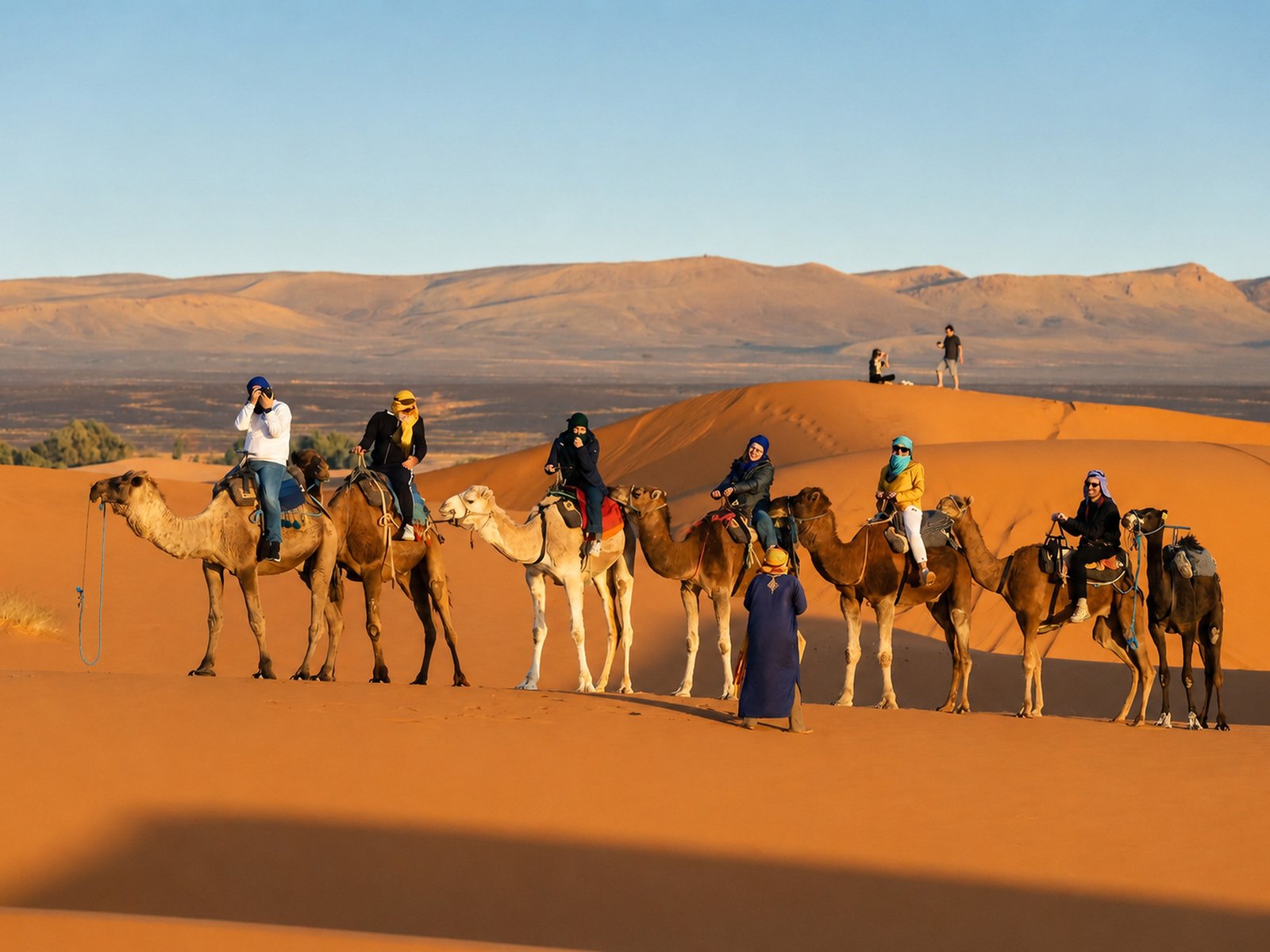
What to Wear on the Camel
Comfort matters more than fashion here.
Long trousers are usually preferable because they help reduce friction against the saddle.
Wear:
- Comfortable trousers
- Breathable shirt
- Closed shoes or secure footwear
- Hat or scarf
- Sunglasses
Keep your camera or phone secured rather than loose in your hand.
What to Pack for a 4x4 Desert Tour
If most of your desert experience involves traveling by 4x4, you have a little more flexibility.
You may be able to keep your normal luggage with you, depending on the vehicle and group size.
Still, avoid overpacking.
Vehicle space can disappear quickly once several travelers and their bags are loaded.
Keep a smaller day bag accessible containing:
- Water
- Sunglasses
- Sunscreen
- Scarf
- Phone
- Camera
- Power bank
- Snacks
- Medication
- Light jacket
Your large suitcase isn't very useful when the sunscreen you need is buried underneath everybody else's luggage.
What to Pack for an Overnight Desert Camp
For one night in a Sahara camp, you really don't need much.
Bring the essentials for the evening, night, and following morning.
A simple overnight packing list is:
- Small backpack or duffel
- Warm sweater or fleece
- Light jacket
- Sleepwear
- Fresh underwear and socks
- Toiletries
- Sunscreen
- Scarf
- Sunglasses
- Phone and camera
- Charging cable
- Power bank
- Medication
- Water
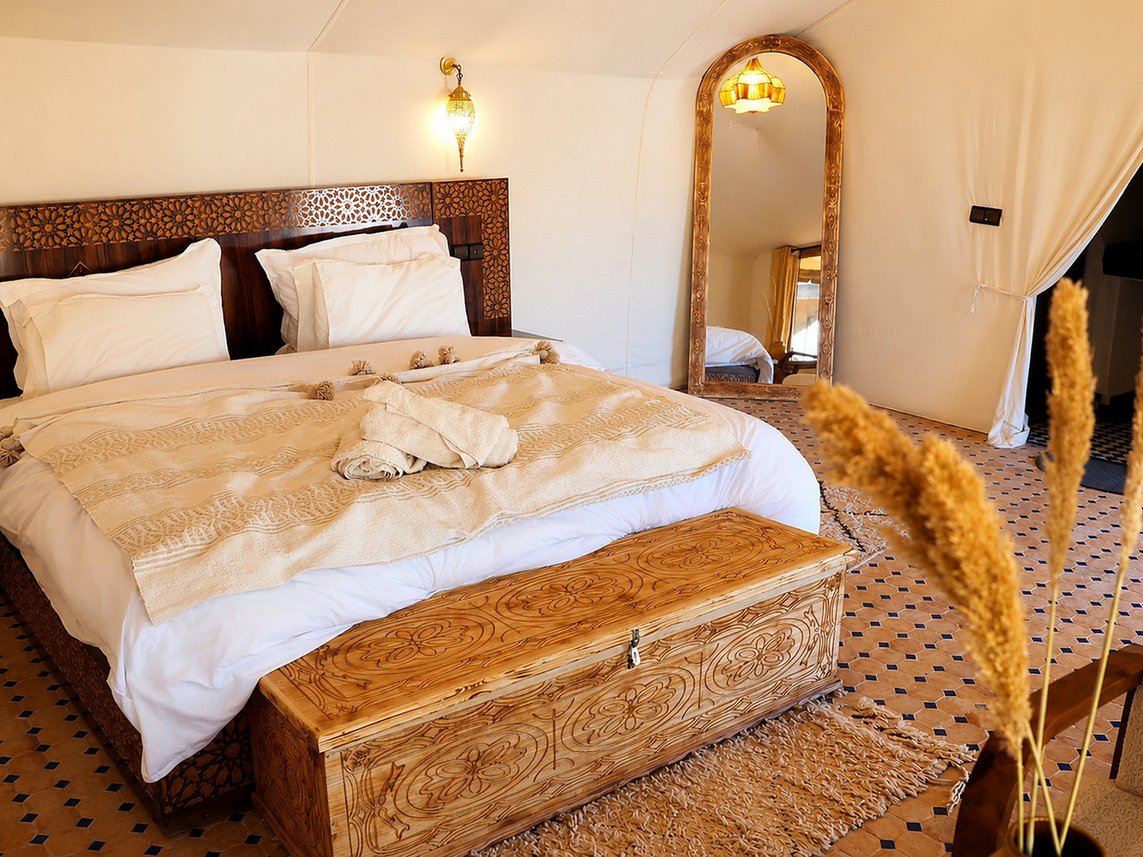
Some luxury desert camps provide private bathrooms, electricity, towels, and extensive amenities. Simpler camps may offer considerably less.
Check exactly what your camp provides before packing.
Electronics and Camera Gear
The Sahara is one of those places where almost everyone becomes a photographer.
Whether you're using a smartphone or professional camera equipment, remember that sand and electronics aren't particularly good friends.
Bring:
- Phone
- Camera
- Spare batteries
- Memory cards
- Charging cables
- Power bank
- Protective camera bag
- Lens cloth
Keep equipment inside a closed bag whenever you're not using it, particularly on windy days.
A small cleaning cloth can also be useful for removing dust from lenses and screens.
Water Bottle
Bring a reusable water bottle.
Desert travel is dry, and it’s easy to underestimate how much water you're losing throughout the day.
Your tour operator may supply bottled water, but having your own bottle makes it easier to keep water with you during drives, walks, camel rides, and camp activities.
Drink regularly rather than waiting until you feel extremely thirsty.
Small Backpack or Day Bag
Even if you're traveling around Morocco with a large suitcase, bring a small backpack.
This will probably become your most useful bag during the desert portion of your trip.
Use it for:
- Water
- Sunscreen
- Camera
- Phone
- Power bank
- Sunglasses
- Scarf
- Jacket
- Snacks
- Medication
- Documents
Keep the things you'll need throughout the day in this bag rather than your main luggage.
What Not to Pack
Packing intelligently also means knowing what to leave behind.
You probably don't need:
- Multiple heavy coats
- Several pairs of shoes
- Large amounts of jewelry
- Excessive toiletries
- Formal clothing
- Heavy luggage for a one-night camp
- Large amounts of unnecessary electronics
Unless your itinerary requires something specific, the lighter your desert luggage is, the easier the experience tends to be.
Sahara Desert Packing Checklist
Before leaving for your Morocco desert tour, run through this list.
Documents and money
- Passport
- Wallet
- Cash
- Bank cards
- Travel insurance
- Booking information
Clothing
- Lightweight shirts
- Long-sleeved shirt
- Lightweight trousers
- Underwear
- Socks
- Warm sweater or fleece
- Light jacket
- Sleepwear
Desert protection
- Sunscreen
- Sunglasses
- Hat
- Scarf or cheche
- Lip balm
Footwear
- Comfortable closed shoes
- Sandals or slides
Toiletries
- Toothbrush
- Toothpaste
- Deodorant
- Moisturizer
- Wet wipes
- Hand sanitizer
- Personal hygiene products
- Medication
Electronics
- Phone
- Camera
- Chargers
- Power bank
- Spare batteries or memory cards
Useful extras
- Reusable water bottle
- Small backpack
- Packing cubes
- Snacks
- Tissues
- Small bag for dirty or sandy clothing
Final Thoughts
Packing for a Sahara Desert tour in Morocco doesn't have to be complicated.
The most important thing is to pack according to how you're traveling, when you're visiting, and how long you're actually spending in the desert.
If you're taking a short camel trek to an overnight camp, travel light and bring a small bag with only the essentials.
If you're exploring by 4x4, you'll have a little more luggage flexibility, but keeping your everyday items in a separate backpack will still make life easier.
And regardless of how you're traveling, remember the desert basics: sun protection during the day, warm layers for the evening, comfortable clothing, plenty of water, and something to keep the sand out of your face.
Pack those properly and you'll be ready to focus on the part that matters: watching the sun disappear behind the dunes.
Recommended Tours for this Route
3-Day Marrakech to Merzouga Guided Desert Tour
Cross the High Atlas Mountains, explore ancient kasbahs, and sleep under the Saharan stars.

4-Day Fes to Merzouga Guided Desert Tour
Roundtrip guided desert journey from Fes through the Middle Atlas, Ziz Valley, and Erg Chebbi dunes.
Ready to Experience Morocco First-Hand?
Let our local guides craft a personalized tour around your travel schedule and interests.
More Morocco Travel Articles
Marrakech to Merzouga: Route, Highlights, and What to Expect
Planning a Marrakech to Merzouga desert tour? Discover the route, distance, Aït Ben Haddou, Dades and Todra highlights, Erg Chebbi, camel rides, desert camps, and what to expect.
Understanding Moroccan Culture, Tipping, and Local Customs
Practical advice on dress etiquette, photography, haggling in souks, and tipping standards.
Packing List For Morocco 2026
Use our complete Morocco packing list for 2026, including clothes, travel essentials, toiletries, electronics, luggage and practical tips for your trip.