Merzouga & Erg Chebbi
Immense landscape of wind-shaped sand dunes, palm groves, and trans-Saharan heritage.
Why Go to Merzouga & Erg Chebbi
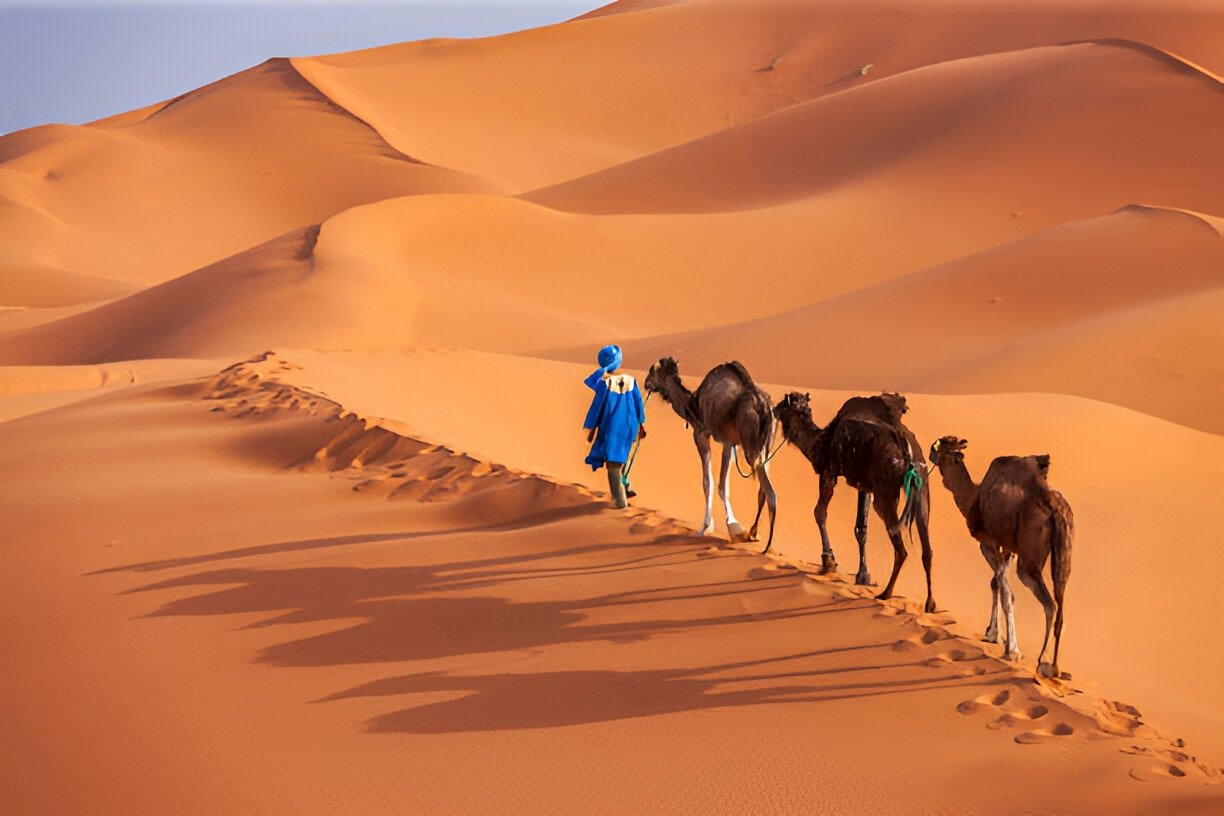
On the edge of southeastern Morocco, Merzouga is one of the country’s best-known gateways to the Sahara. The small desert village sits beside Erg Chebbi, an immense landscape of wind-shaped sand dunes, palm groves, desert tracks and open horizons. Morocco’s national tourism office describes Merzouga as one of the gateways to the Sahara and highlights Erg Chebbi as a landscape made for hikes, camel journeys and exploration.
Unlike Marrakech or Fès, the main attraction here is not architecture or museums—it is the landscape itself. Visitors come to watch the dunes change from gold to orange and red at sunrise and sunset, cross the sands by camel or on foot, spend a night in a desert camp and experience the extraordinary darkness and silence of the Sahara after nightfall.
The region also offers more than sand. Nearby Dayet Srij is a seasonal lake that can attract birdlife when water is present, while the village of Khamlia is associated with Gnawa musical traditions. Farther west, Rissani preserves links with historic Tafilalet and the caravan routes that once crossed the Sahara.
Best of Merzouga & Erg Chebbi
Best Places to Stay in Merzouga & Erg Chebbi
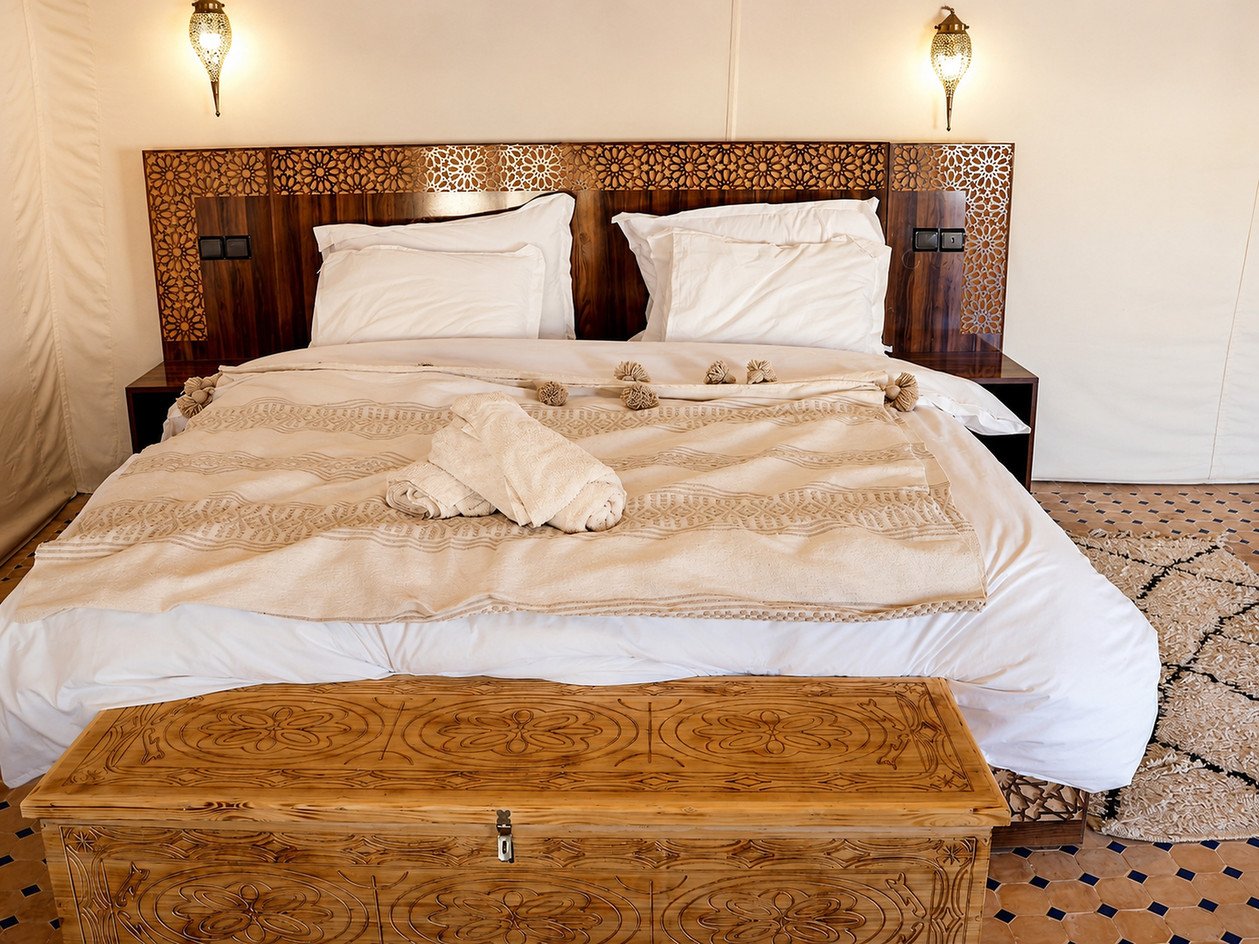
Accommodation here ranges from conventional kasbah-style hotels at the edge of the dunes to elaborate tented camps farther into the desert. These are not an official ranking, but real examples of established accommodation in the area:
Riad Madu
A kasbah-style property in Hassi Labied, at the edge of the Erg Chebbi area.
Madu Luxury Desert Camp
A desert-camp option associated with the Riad Madu team.
Kasbah Hotel Tombouctou
A large desert-edge hotel with traditional Moroccan styling.
Desert Luxury Camp – Erg Chebbi
A tented camp in the Erg Chebbi area with ensuite tents and organized desert activities.
Merzouga Luxury Desert Camps
Tented accommodation overlooking the Erg Chebbi dunes.
Sahara Stars Camp
A luxury-style camp located in the Erg Chebbi area.
Luxury Camp Merzouga
Another desert glamping option offering camel trekking and sandboarding experiences.
When choosing accommodation, decide first whether you want to sleep in or beside Merzouga/Hassi Labied, where road access is easy, or spend the night inside the desert camp zone, which offers a stronger Sahara atmosphere but usually requires a camel or 4x4 transfer.
Best Things to Do in Merzouga & Erg Chebbi
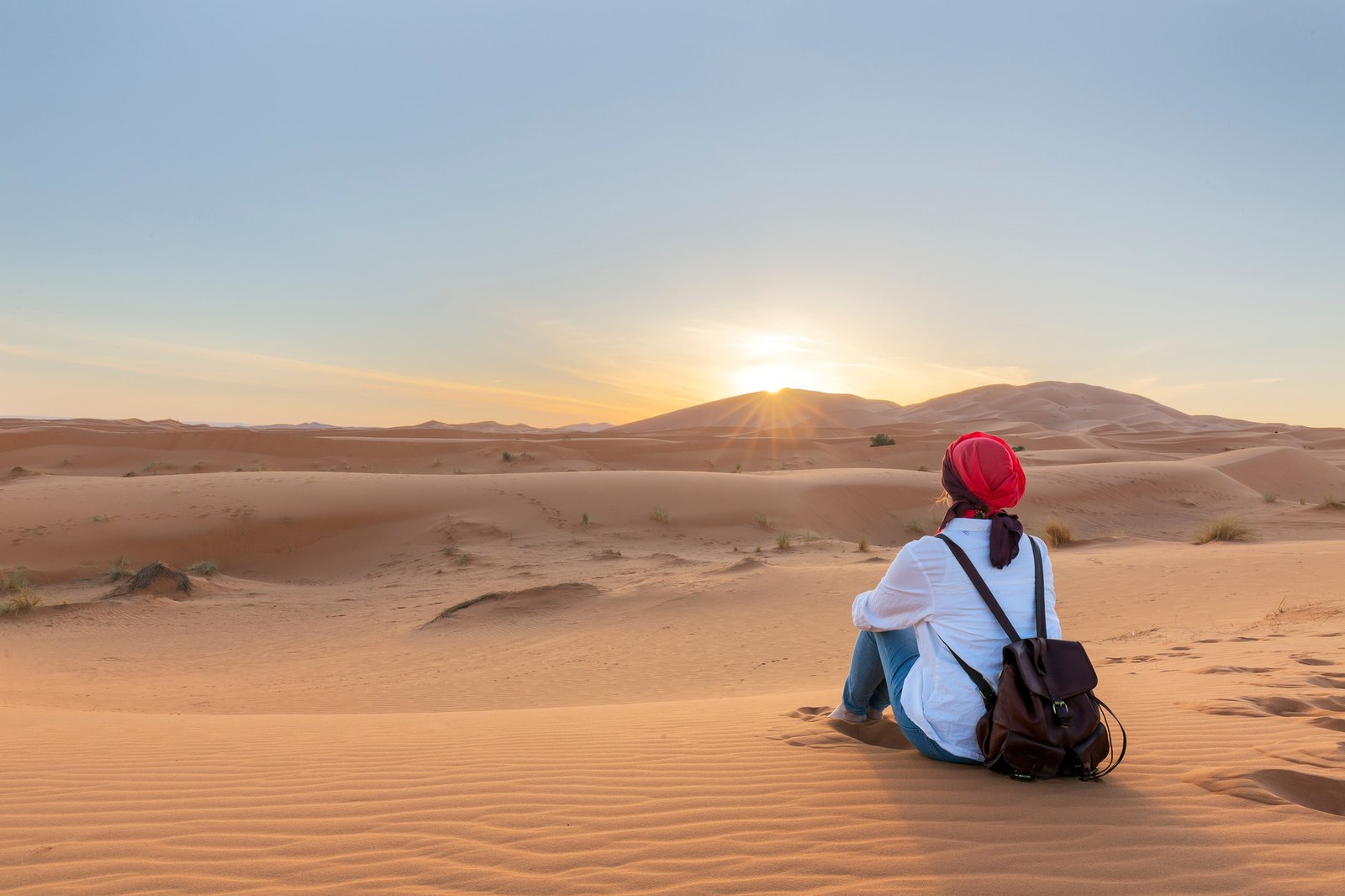
Watch sunrise from the Erg Chebbi dunes
Wake before dawn to climb the golden dune crests and watch the desert shift from deep indigo to glowing apricot and orange tones.
See the dunes change color at sunset
Experience the magic of twilight across Erg Chebbi as the sun dips below the horizon, transforming the sand into rich crimson and terracotta hues.
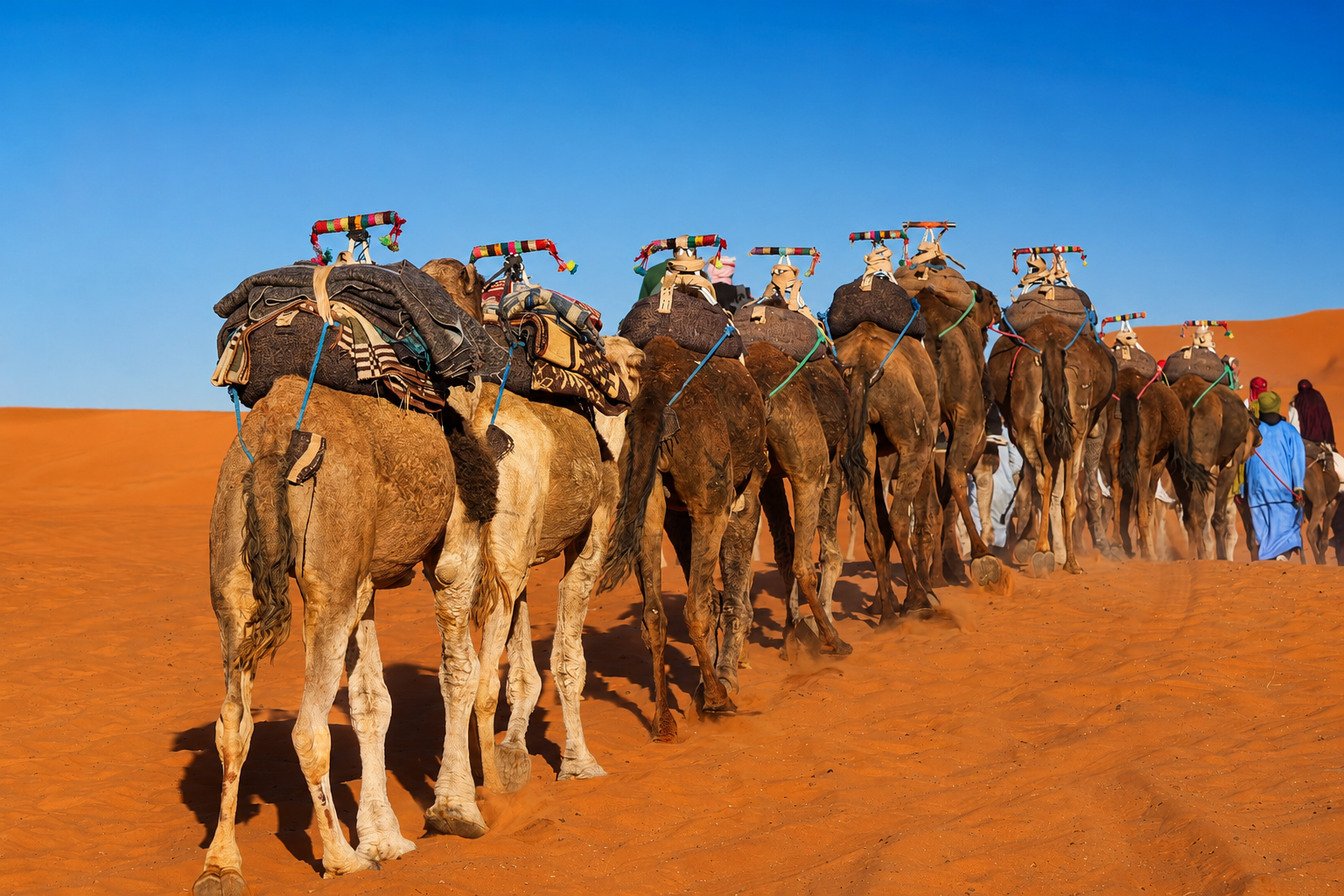
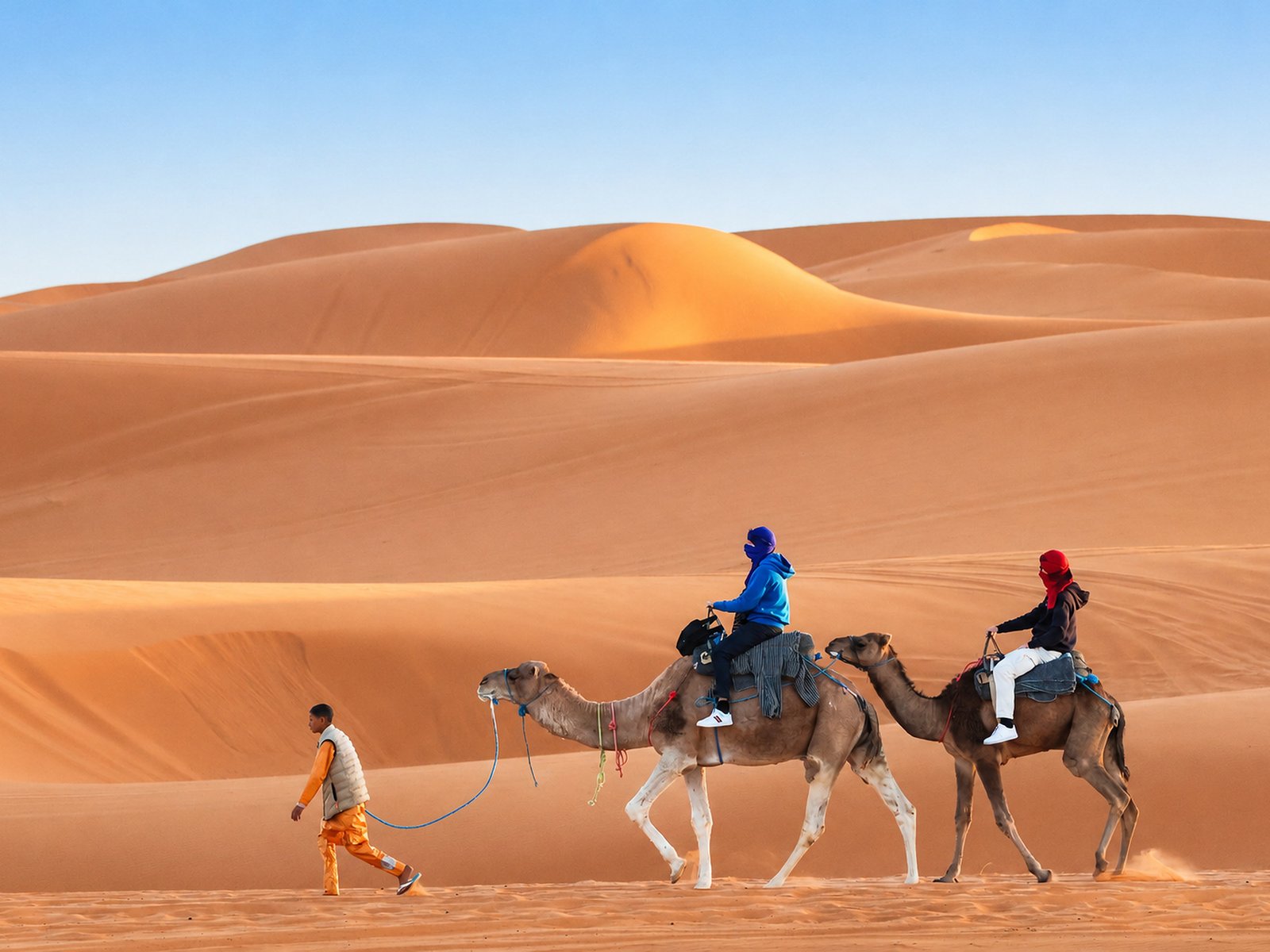
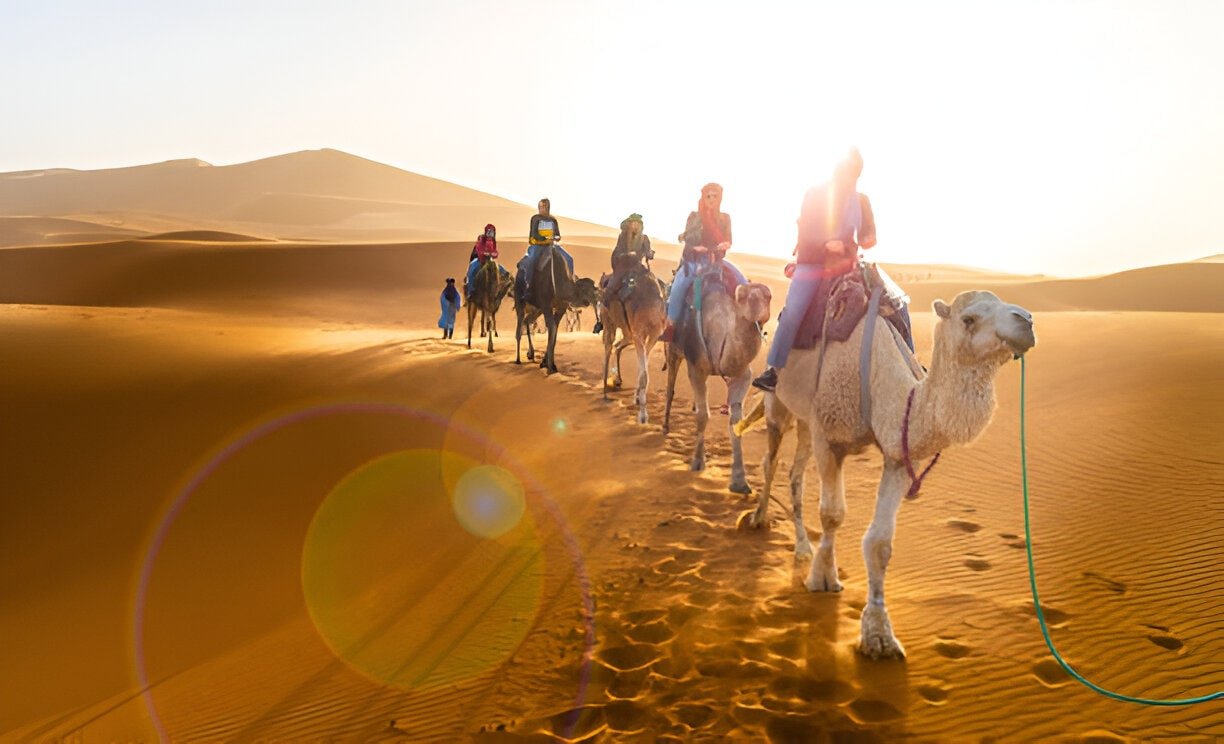
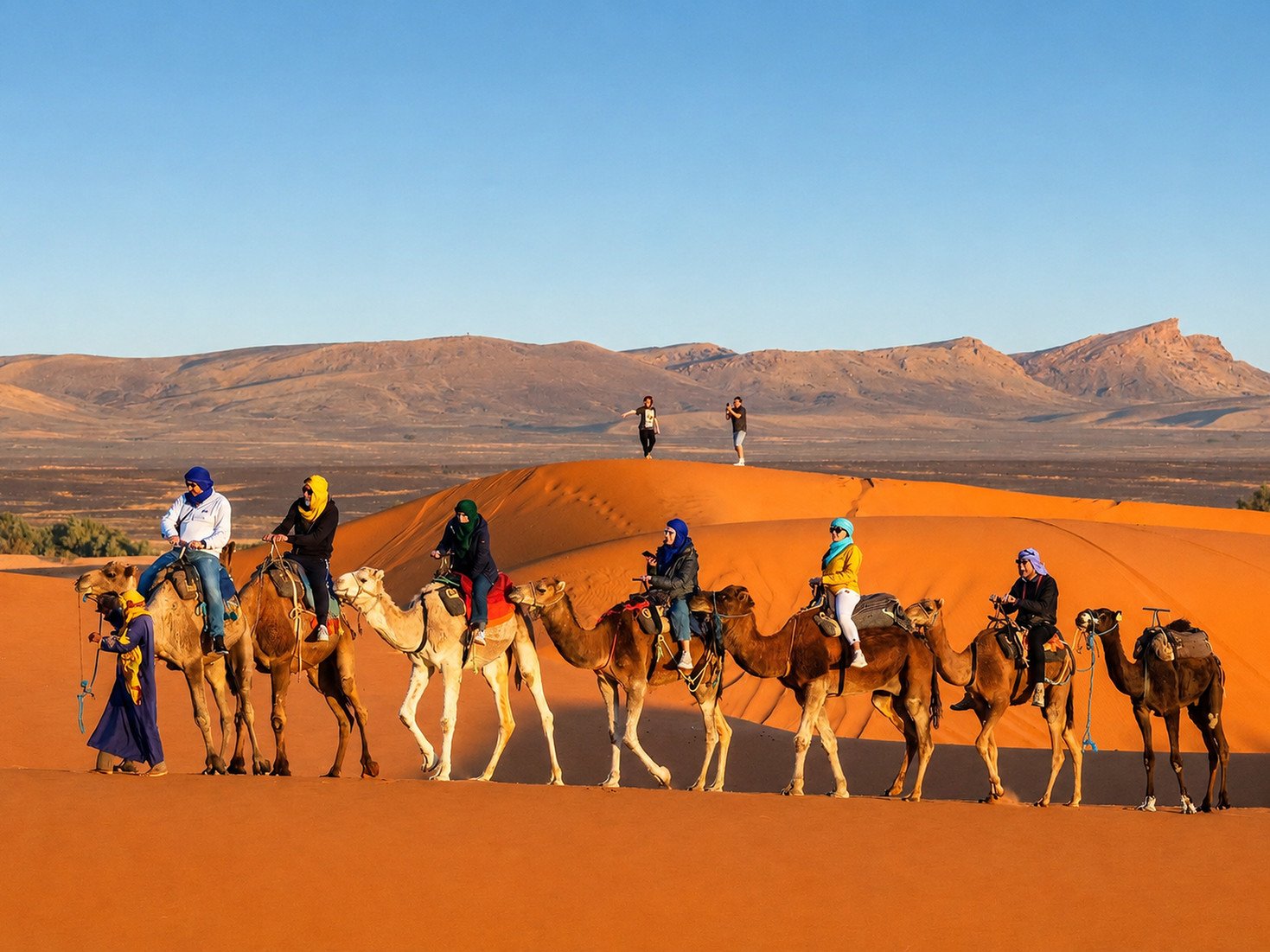
Take a camel trek across the sand
Ride across shifting sands guided by local Berber camel handlers along ancient nomadic tracks into the heart of the Sahara.
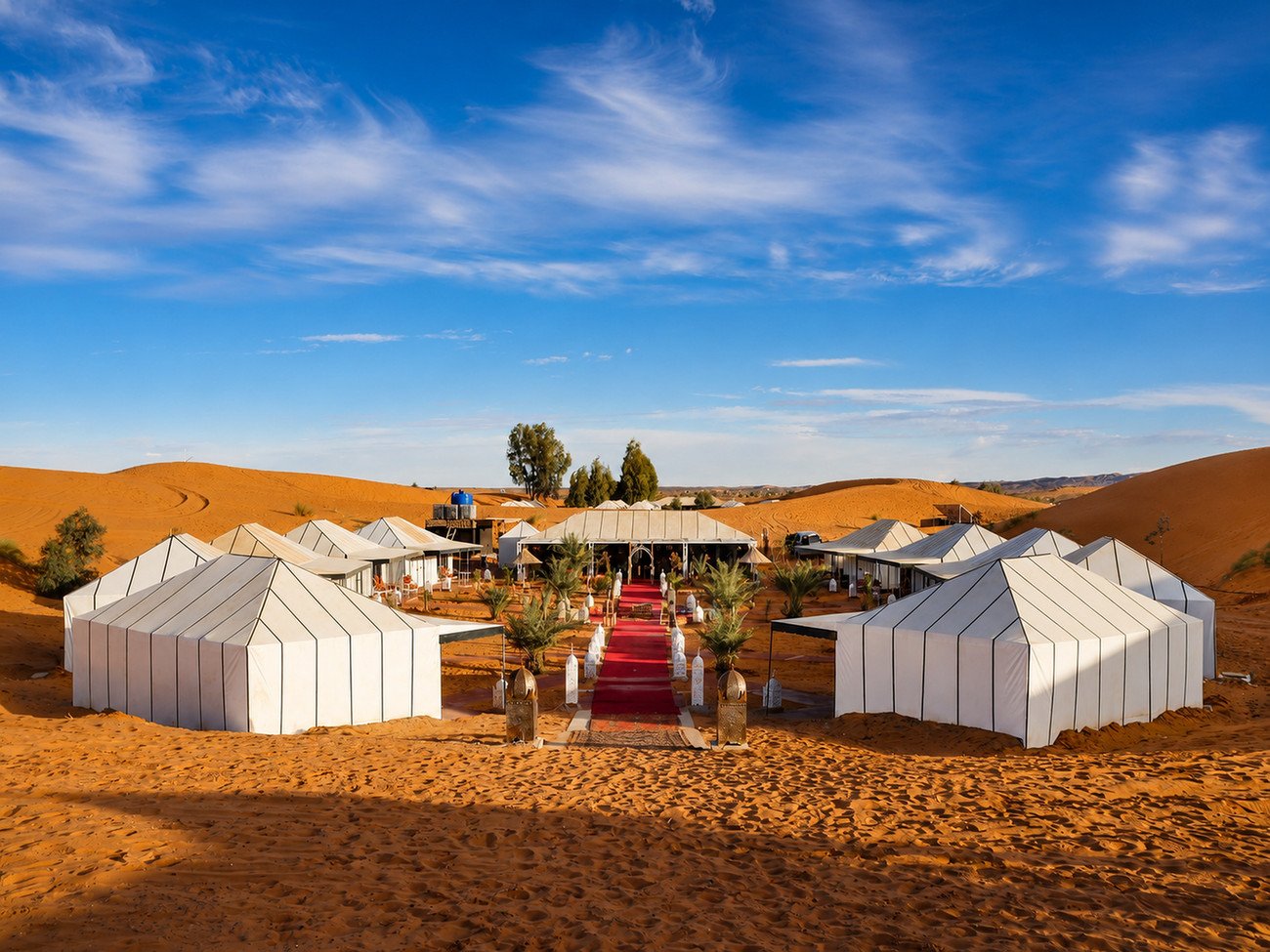
Spend a night in a desert camp
Sleep in comfortable canvas or luxury glamping tents under a canopy of millions of stars with traditional campfire hospitality.
Try sandboarding on the dunes
Glide down the steep slip faces of Erg Chebbi’s 150-meter-high dunes on custom sandboards for a memorable desert thrill.
Explore the desert tracks on a guided 4x4 excursion
Traverse remote desert tracks, fossil beds, nomadic settlements, and dry riverbeds with an experienced local Saharan driver.
Visit Khamlia and hear Gnawa music
Immerse yourself in hypnotic spiritual melodies, castanets (qraqeb), and guembri rhythms performed by the Gnawa musicians of Khamlia village.
Visit Dayet Srij when the seasonal lake contains water
Spot seasonal migratory birdlife, including flamingos and desert species, at this remarkable temporary desert lake just west of Merzouga.
Explore Rissani and the historic Tafilalet region
Discover the ancient trade gateway of Rissani, historic ksar villages, palm groves, and the birthplace of the Alaouite dynasty.
Stargaze after dark
Marvel at the breathtaking clarity of the Saharan night sky, free from light pollution, where the Milky Way stretches vividly from horizon to horizon.
Camel excursions and sand activities are among the experiences specifically promoted by Morocco’s national tourism office for Merzouga and Erg Chebbi.
Merzouga & Erg Chebbi Travel Tips
Best Months to Visit
The most comfortable period for most travelers is generally October through April, when daytime temperatures are far more manageable than in summer. March and April bring pleasantly warm days, although spring can also be windy. October and November are particularly attractive for combining warm daytime weather with cooler evenings.
June through August can be extremely hot. Historical climate data displayed for the Erg Chebbi area show average highs of about 97°F (36°C) in June, 102°F (39°C) in July and 100°F (38°C) in August.
Winter has the opposite challenge: sunny afternoons can be comfortable, but desert nights get cold. January averages shown for the area are approximately 63°F (17°C) by day and 36°F (2°C) at night. Warm layers are therefore important for winter camp stays.
For comprehensive season-by-season planning across Morocco, consult our guide on the best time to visit Morocco.
Weather in Erg Chebbi
Average Temperature (°F)
Mild winter afternoons (63°F–68°F) with cold nights (36°F–41°F), warm spring/fall (72°F–88°F), and intense summer heat (97°F–102°F).
Average Precipitation (in)
Extremely arid Saharan climate with minimal annual precipitation ranging from 0.15 to 0.79 inches monthly.
| Month | Average High (°F) | Average Low (°F) | Precipitation (in) |
|---|---|---|---|
| Jan | 63°F | 36°F | 0.26 in |
| Feb | 68°F | 41°F | 0.69 in |
| Mar | 73°F | 48°F | 0.5 in |
| Apr | 81°F | 54°F | 0.35 in |
| May | 88°F | 61°F | 0.28 in |
| Jun | 97°F | 68°F | 0.28 in |
| Jul | 102°F | 73°F | 0.15 in |
| Aug | 100°F | 72°F | 0.41 in |
| Sep | 91°F | 64°F | 0.79 in |
| Oct | 82°F | 57°F | 0.6 in |
| Nov | 72°F | 46°F | 0.33 in |
| Dec | 64°F | 39°F | 0.46 in |
These figures should be treated as indicative rather than precise local measurements. The climate dataset presented for Erg Chebbi is based on weather reports from Ouarzazate, roughly 281 kilometers away, so actual conditions at Merzouga can differ. It does, however, illustrate the area’s very hot summers, cool winter nights and low rainfall.
What You Need to Know
- Prepare for temperature swings. Desert conditions can change dramatically between afternoon and night. Bring lightweight sun protection as well as warmer clothing if you are sleeping in a camp. Consult our dedicated checklist on what to pack for a Sahara desert tour for detailed recommendations on clothing, footwear, and camp essentials.
- Protect yourself from the sun. A wide-brimmed hat or scarf, sunglasses, sunscreen and plenty of drinking water are particularly important when walking or riding in the dunes.
- Sand gets everywhere. Keep cameras, phones and other electronics protected when winds pick up. A scarf is also useful for keeping blowing sand away from your face.
- Do not underestimate the desert. Once away from the settlements, landmarks can be difficult to distinguish. Use an experienced guide for longer dune walks or off-road excursions rather than heading deep into the desert alone.
- Carry Moroccan dirhams. Cash remains useful for small restaurants, shops, tips and local purchases, even though many higher-end hotels and camps accept cards.
- Ask what your camp price includes. Desert-camp packages vary considerably. Check whether camel or 4x4 transfers, dinner, breakfast, sandboarding and private bathrooms are included before booking.
How to Save Money in Merzouga
- Stay in Merzouga or Hassi Labied instead of a luxury camp. A village guesthouse can cost substantially less while still placing you within walking distance of the dunes.
- Spend only one night in the desert camp. You can combine one special camp night with one or two cheaper nights at a village hotel or riad.
- Book activities locally when appropriate. Hotels and guesthouses often arrange camel rides and local excursions. Compare exactly what is included rather than judging only by headline prices.
- Walk into the accessible dune areas. You do not need an organized excursion simply to experience the edge of Erg Chebbi or watch sunset from nearby dunes.
- Share transfers. The journey to Merzouga is long, so shared transport can be much cheaper than arranging a private vehicle from Marrakech or Fès.
Culture & Customs
Merzouga lies in Morocco’s Drâa-Tafilalet region, an area deeply connected with oasis life, trans-Saharan exchange and Amazigh traditions. Although tourism is now an important part of the local economy, the settlements around Erg Chebbi retain a cultural identity very different from Morocco’s large cities.
Arabic and Amazigh languages are part of everyday life, while French is also widely used in Morocco’s tourism sector. Learning a few simple expressions such as “Salam” for hello and “Chokran” for thank you can make interactions more personal.
One of the most interesting cultural excursions is Khamlia, south of Merzouga. The village is particularly associated with Gnawa music, a Moroccan musical and spiritual tradition with strong sub-Saharan African roots.
Tourists are sometimes offered visits with nomadic or semi-nomadic families around the desert. These encounters are best approached respectfully rather than as photo opportunities. Ask before photographing people and use established guides or community-based experiences where possible.
Relatively modest clothing is appropriate in villages even though tourist camps are more relaxed. During Ramadan, local schedules may change and many residents will fast between dawn and sunset.
What to Eat
Meals in Merzouga are usually simple, filling and influenced by the cuisine of southeastern Morocco. Many desert camps include dinner and breakfast as part of an overnight package.
A regional specialty worth looking for is medfouna, sometimes nicknamed “Berber pizza” or “desert pizza.” It consists of stuffed dough rather than a conventional pizza and is especially associated with the Rissani and Tafilalet area.
You will also find familiar Moroccan dishes such as:
- Tagine, slow-cooked with meat, vegetables, olives or preserved lemon
- Couscous, traditionally eaten particularly on Fridays
- Harira, a hearty soup commonly prepared with tomato, legumes and spices
- Brochettes, grilled meat skewers
- Moroccan salads
- Fresh dates, an important product of the Tafilalet oasis region
- Moroccan mint tea
Dinner at a desert camp often consists of soup or salad followed by tagine or couscous, fruit or pastries and tea. The experience of eating outdoors or in a large communal tent can be as memorable as the food itself.
Carry extra drinking water during excursions. Desert air is extremely dry, and you may become dehydrated more quickly than expected.
Safety
The greatest everyday risks in Merzouga are somewhat different from those in Morocco’s big cities. Crowded-market pickpocketing is less central to the experience, while heat, sun exposure, isolation, off-road travel and rapidly changing desert conditions deserve more attention.
Avoid heading deep into the dunes alone, particularly in extreme heat or when visibility is reduced by wind and sand. For 4x4 trips, longer treks or excursions away from populated areas, use experienced local operators.
Medical facilities are limited compared with Morocco’s major cities. U.S. travel information specifically notes that specialized and emergency medical care outside major Moroccan cities may be limited.
For Morocco more generally, the current U.S. State Department advisory remains Level 2: Exercise Increased Caution due to terrorism. It advises travelers to remain alert in tourist locations and avoid demonstrations and crowds.
Travel advisories can change, so check your own government’s current guidance before departure.
Getting Around Merzouga & Erg Chebbi
Once you reach Merzouga, getting around depends on the terrain.
Walking is ideal for Merzouga village and the nearby edges of Erg Chebbi. The dunes themselves can be explored on foot, although walking on soft sand is much more tiring than the distance suggests.
Camels are commonly used for short tourist treks into the dunes and for transfers to some camps. Morocco’s national tourism office specifically promotes dromedary excursions in the area.
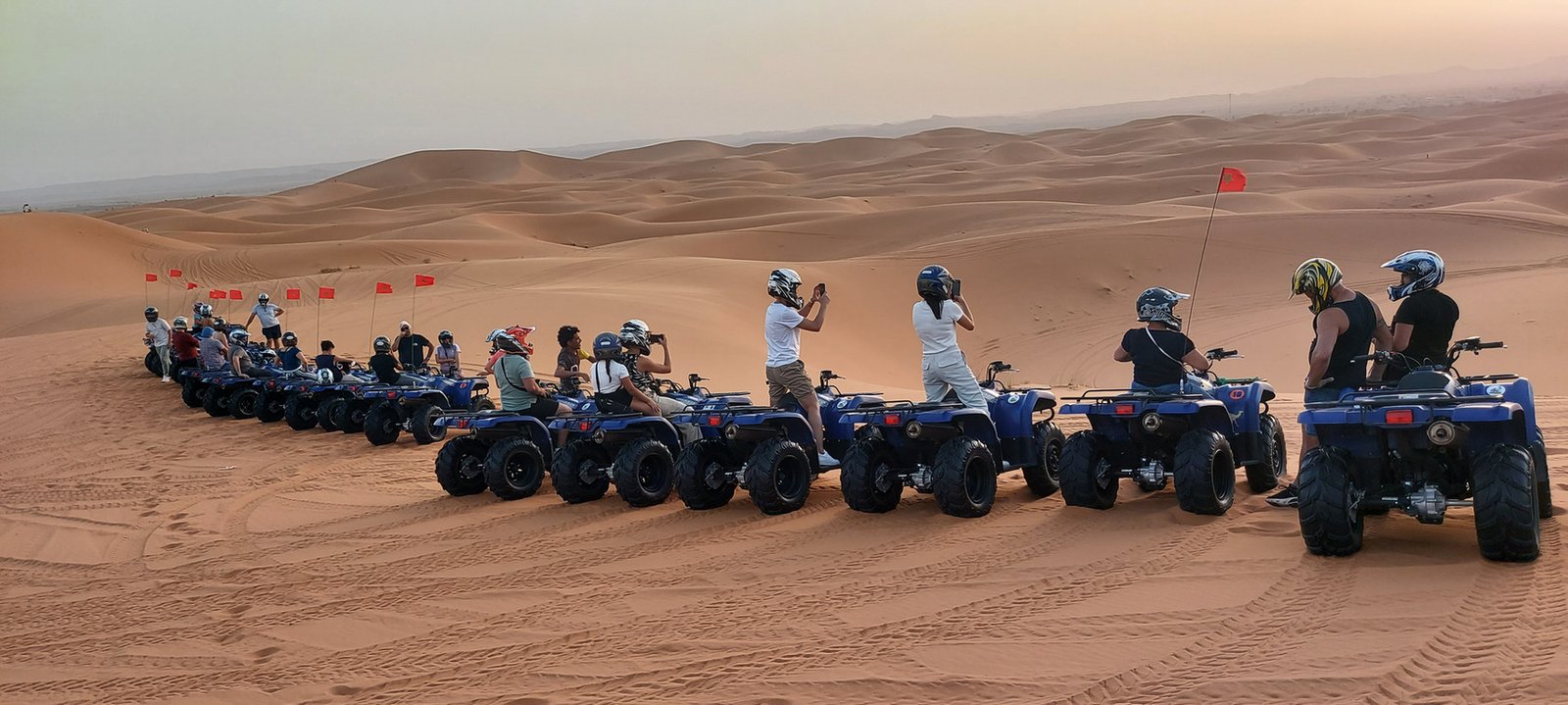
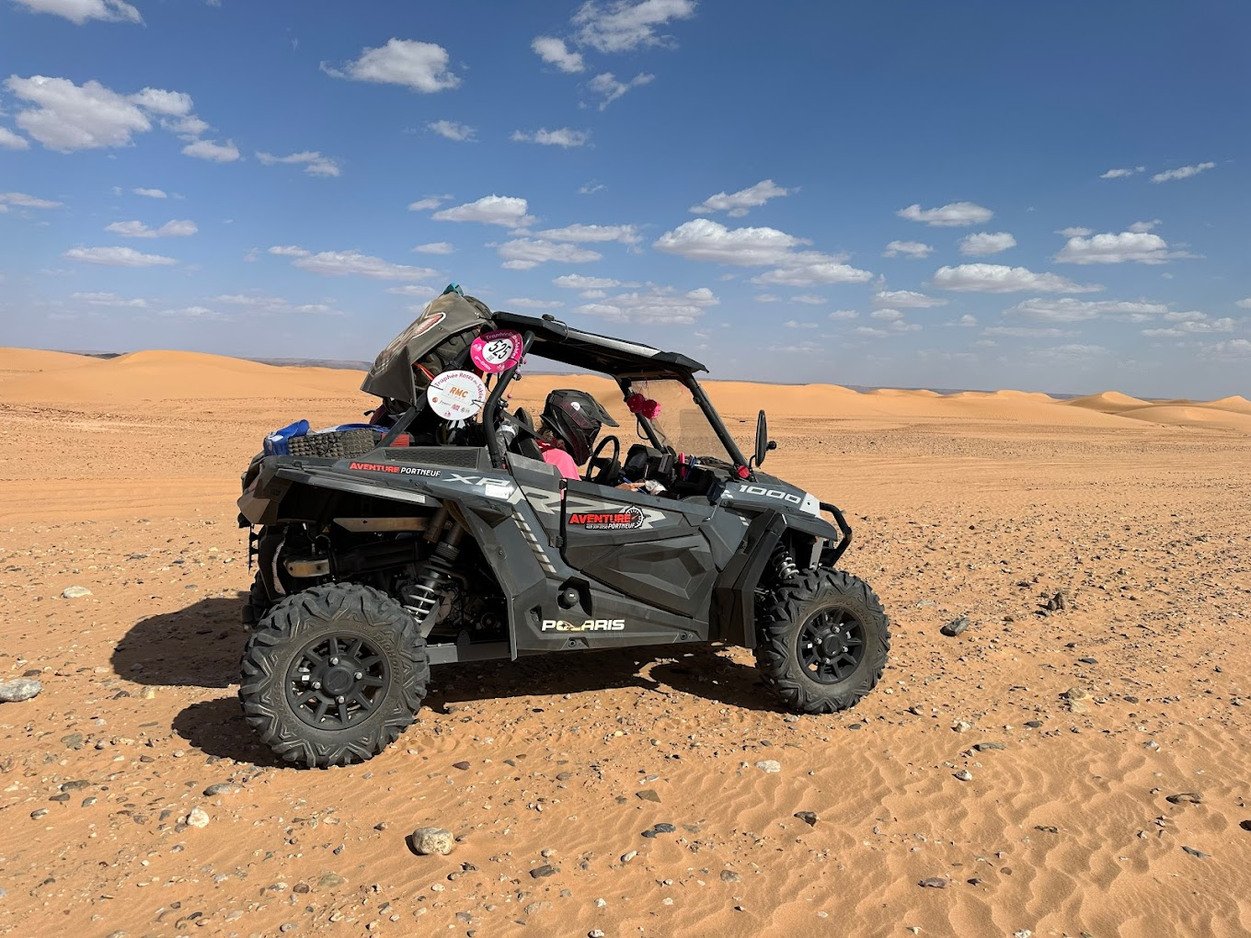
4x4 vehicles are useful for camps farther from paved roads, circuits around Erg Chebbi and excursions to remote desert locations. Quad bikes and similar activities are also offered locally.
Merzouga does not have a railway station, so the final part of the journey is by road. Most visitors arrive from the direction of Fès, Marrakech, Ouarzazate, Tinghir, Erfoud or Rissani.
For travelers flying closer to the desert, Errachidia Moulay Ali Cherif Airport is the main airport serving this part of southeastern Morocco. Morocco’s airport authority lists taxi, car-rental and other passenger facilities there. From Errachidia, travelers continue to Merzouga by road.
If you’re coming from Fès, Morocco’s tourism authority gives a road journey of roughly 342 km to the Errachidia–Midelt–Merzouga destination area. Because road journeys to the Sahara are long, many travelers incorporate stops in the Middle Atlas, Ziz Valley, Erfoud or Rissani rather than trying to rush directly to the dunes.
Entry & Exit Requirements
Merzouga and Erg Chebbi follow the same immigration rules as the rest of Morocco.
For U.S. citizens, current State Department information says a passport should have at least six months of validity at the time of entry and at least one blank passport page. A tourist visa is not required for stays of less than 90 days.
Anyone remaining in Morocco beyond 90 days without arranging an extension may need to resolve their immigration status before departure.
Travelers using other passports should check the requirements applicable to their nationality. Visa and entry rules can change, so they should always be confirmed with an official government source shortly before travel.
Guided Tours Visiting Merzouga
3-Day Marrakech to Merzouga Guided Desert Tour
Cross the High Atlas Mountains, explore ancient kasbahs, and sleep under the Saharan stars.

4-Day Fes to Merzouga Guided Desert Tour
Roundtrip guided desert journey from Fes through the Middle Atlas, Ziz Valley, and Erg Chebbi dunes.

10-Day Morocco Grand Guided Tour
The ultimate guided 10-day journey from Casablanca to Marrakech via Chefchaouen, Fes, Merzouga Sahara, and High Atlas.
5-Day Marrakech to Fes Guided Desert Expedition
A 5-day one-way desert expedition from Marrakech to Fes through Ait Ben Haddou, Dades, Todra Gorge, and Erg Chebbi with two desert camp nights.
4-Day Luxury Guided Sahara Desert Experience
A 4-day luxury Sahara desert roundtrip journey from Marrakech featuring boutique kasbahs, two nights in an Erg Chebbi camp, and a scenic Draa Valley return.
6-Day Morocco Family Guided Adventure Tour
A guided 6-day family adventure from Marrakech combining sunrise hot-air ballooning, Atlas Mountains hiking, Todra Gorge rock climbing, Sahara camel trekking, luxury desert camping, and UNESCO kasbahs.

14-Day Ultimate Morocco Guided Grand Discovery
An extraordinary 14-day guided grand journey from Tangier to Marrakech via Chefchaouen, Fes, Merzouga Sahara, Ait Ben Haddou, and Essaouira.
Marrakech & Southern Morocco Guided Tour: Ouarzazate, Merzouga & Zagora
Cross mountain passes, kasbah country, palm-filled valleys, and the dunes of the Sahara.
Morocco for Solo Travelers Guided Tour: Marrakech, the Sahara & Fes
Explore Marrakech, cross the Atlas Mountains, experience the Sahara, and discover Fes on a small guided group journey created for solo travelers.
Plan Your Sahara Desert Journey
Experience sunset camel treks, luxury desert glamping under the star-studded African night sky, and private 4x4 dune journeys tailored to your pace.