The Complete Guide to the Best Time to Visit Morocco
Written by Ali Ouhemi (Licensed Senior Local Guide)
The best time to visit Morocco is generally during spring (March to May) and autumn (September to November), when the imperial cities are pleasantly warm and conditions are well suited to exploring the Atlas Mountains and Sahara.
Morocco can be enjoyed throughout the year, but its climate changes dramatically between the Atlantic coast, the inland cities, the mountains and the desert. A single journey can include cool sea breezes, snowy peaks and hot, dry dunes, so the ideal month depends on where you plan to travel.
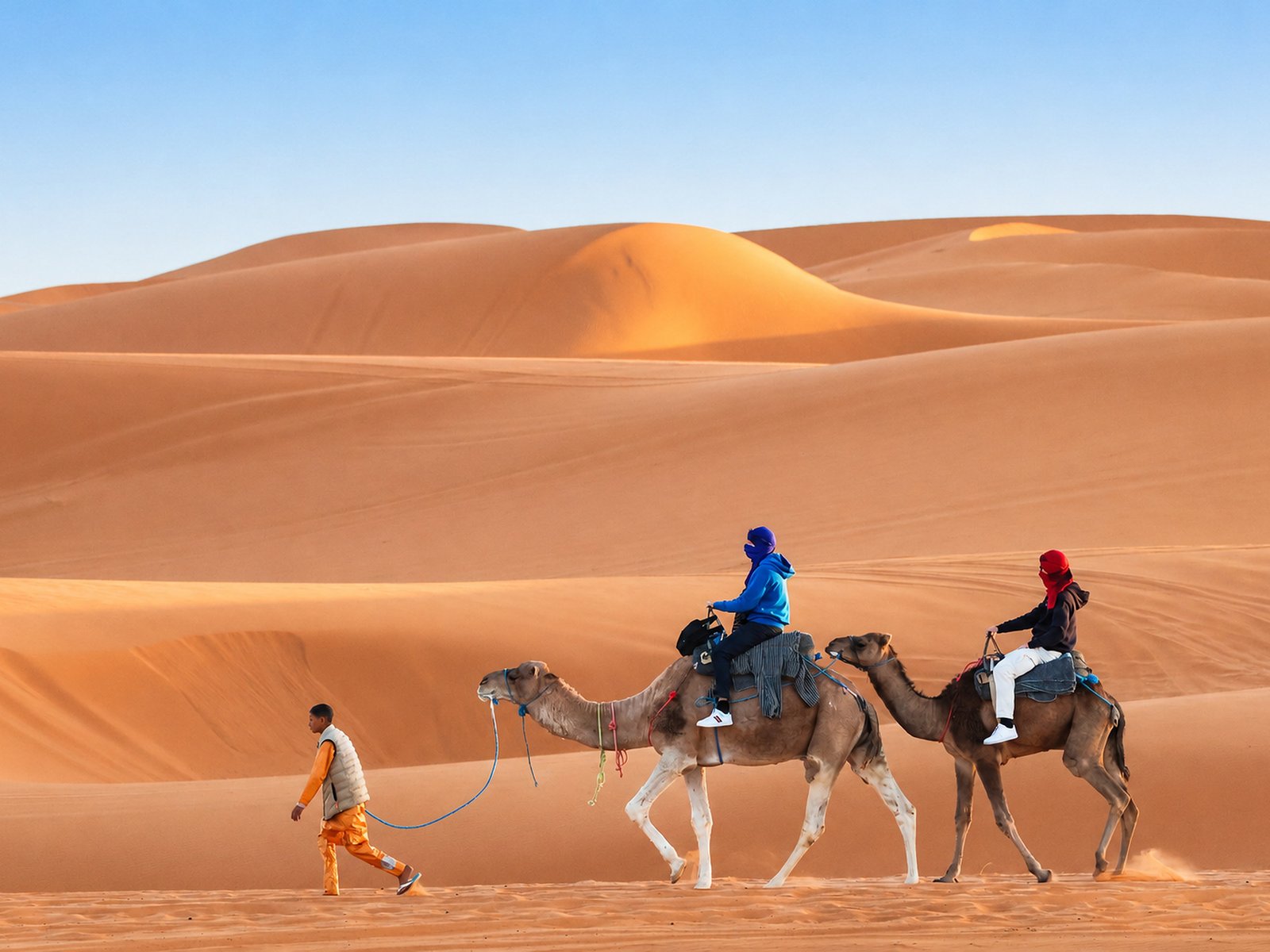
Spring brings green valleys, wildflowers and comfortable sightseeing temperatures. It is an excellent season for wandering the medinas of Marrakech and Fez, crossing the High Atlas and spending a night beneath the stars near the Sahara.
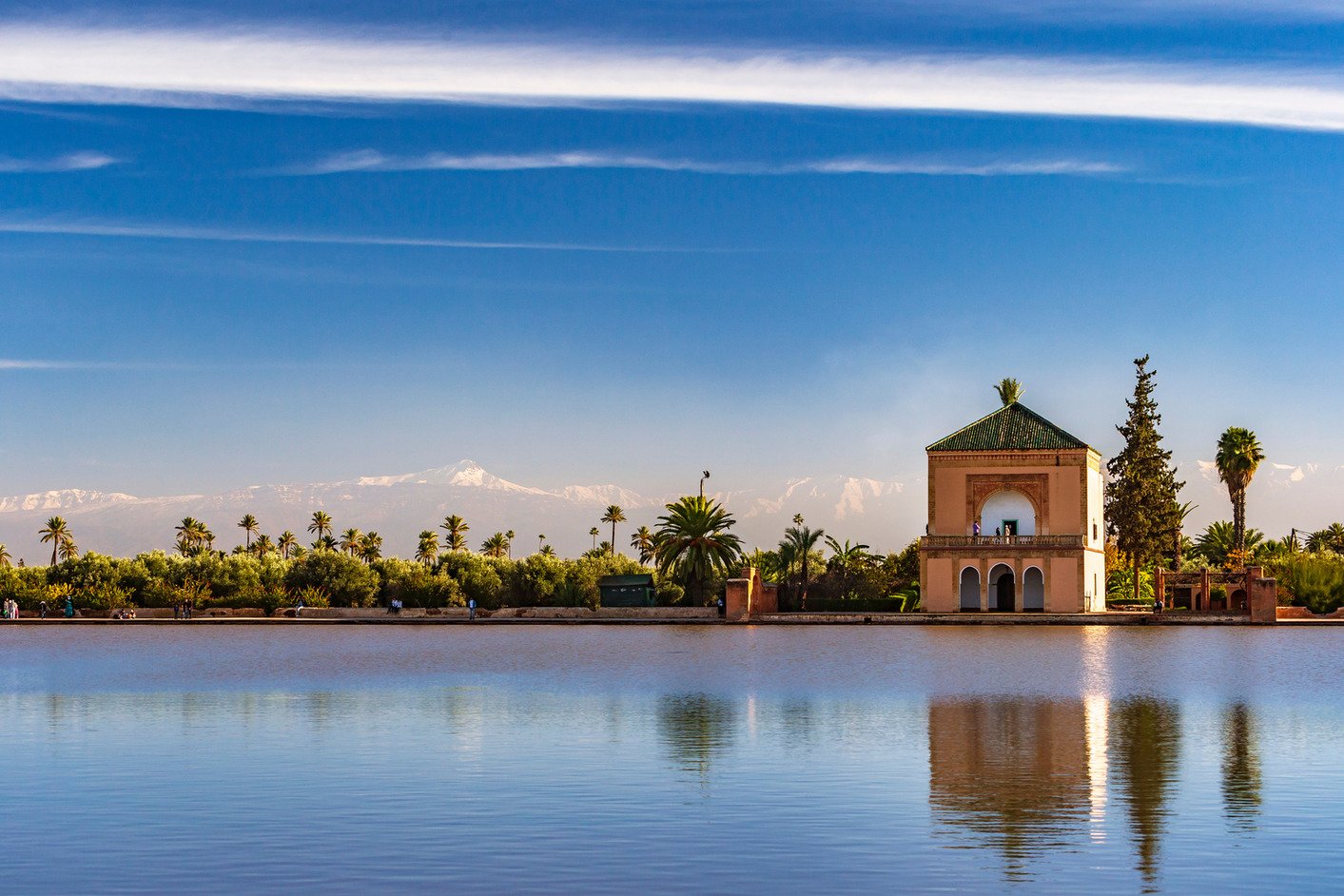
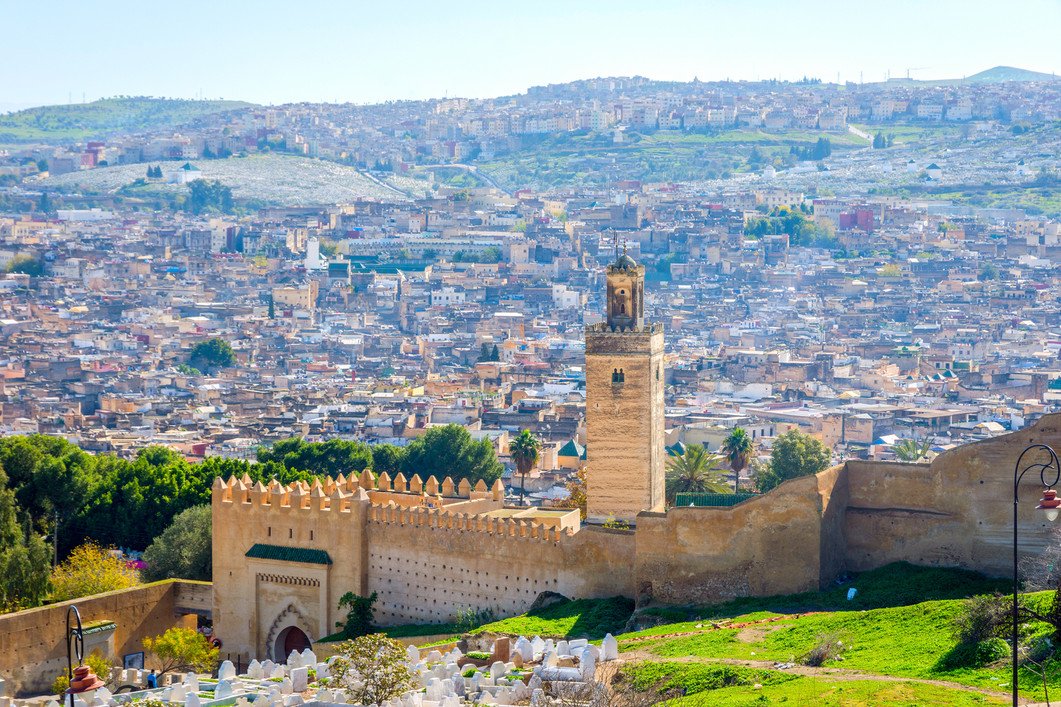
Menara Gardens pavilion and reflecting basin with the Atlas Mountains beyond.
Autumn is equally rewarding. The intense summer heat begins to ease, desert journeys become more comfortable and harvest celebrations bring seasonal produce, dates and saffron to markets across the country.
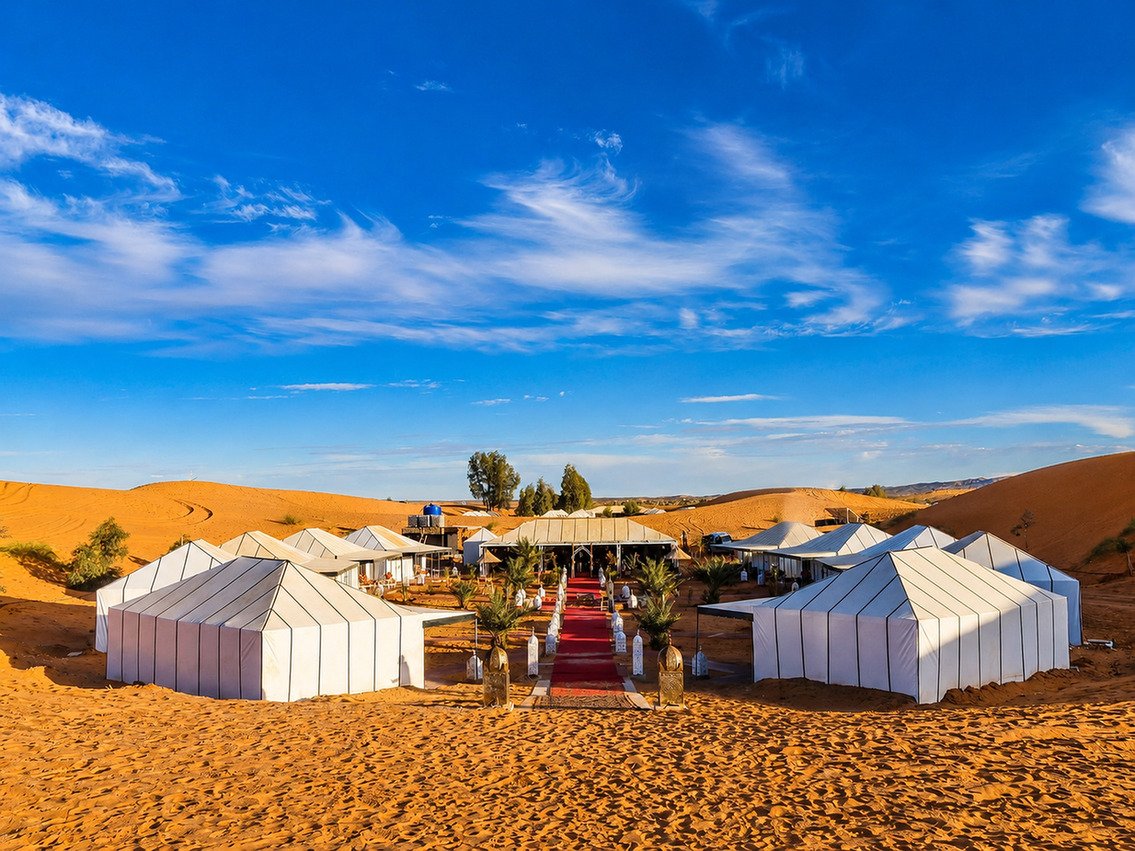
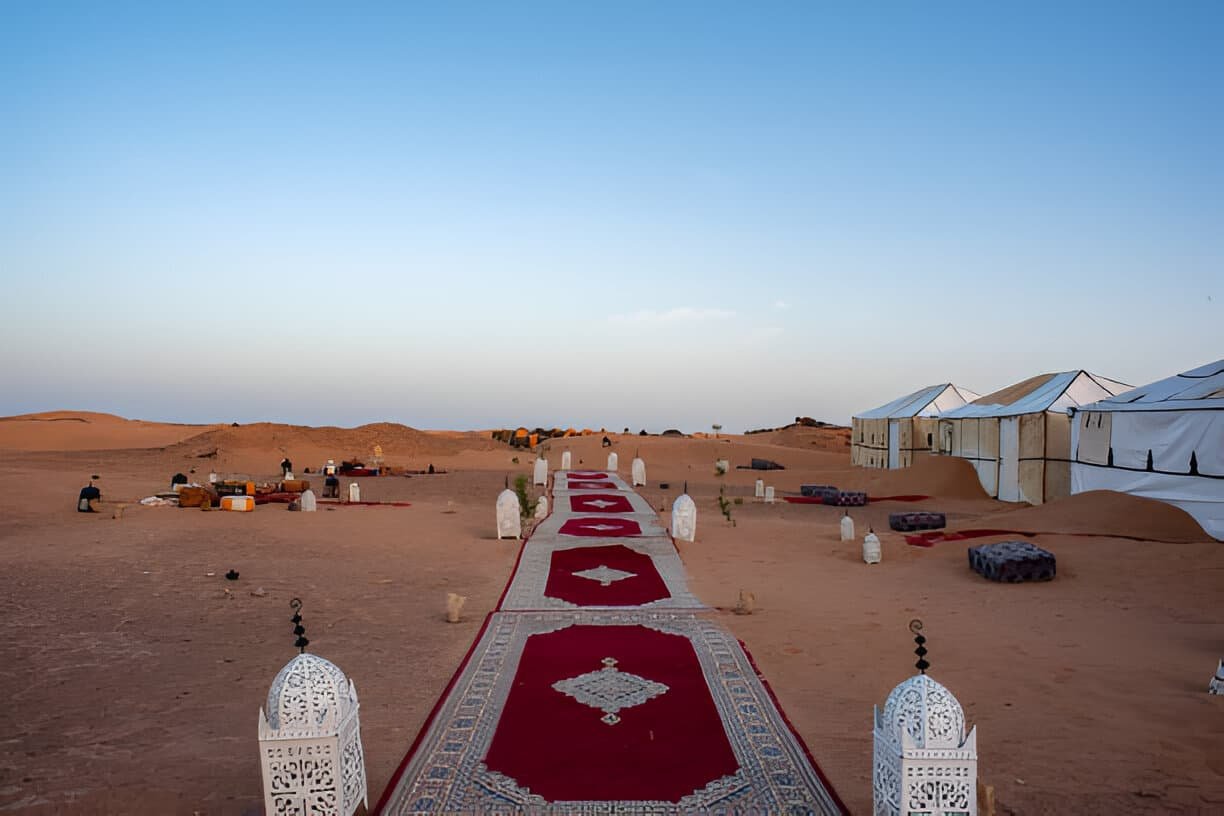
Wide desert glamping camp framed by orange dunes and a sweeping blue sky.
Summer (June to August) is hot in Marrakech, Fez and the desert regions, while Atlantic destinations such as Essaouira and Casablanca remain milder. Winter (December to February) offers crisp, often sunny days, but evenings can be cold and snow is possible in the Atlas Mountains. Because temperatures and conditions shift dramatically between seasons and altitudes, consult our packing list for Morocco for recommendations on seasonal clothing, breathable daytime fabrics, and cold-weather layers.
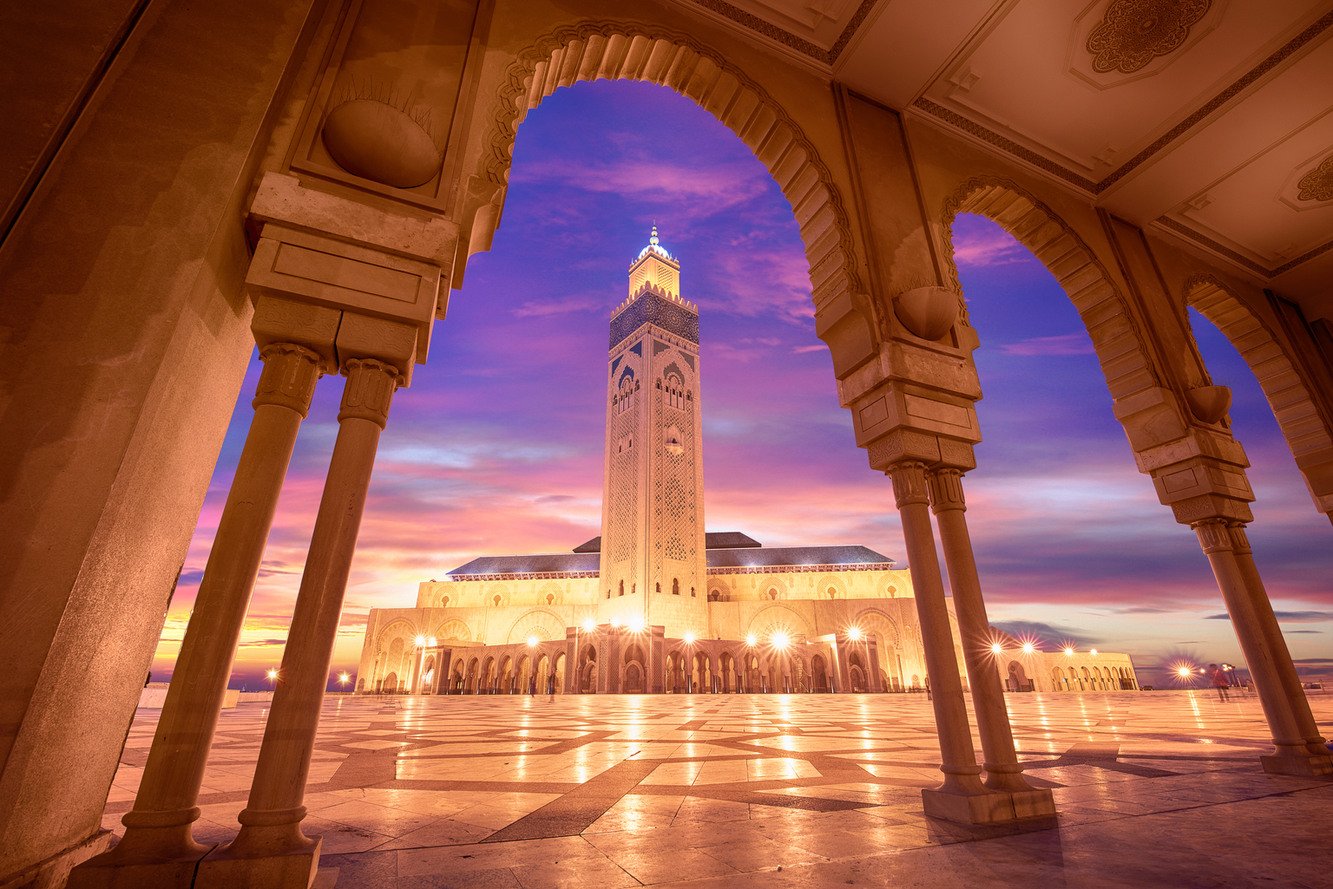
Hassan II Mosque glowing beneath a colorful Casablanca sunset.
To choose the best time to travel to Morocco for your trip, explore the month-by-month climate guide and the festivals and events below. Religious celebrations follow the lunar calendar, and festival dates can change from year to year.
Best Months to Visit Morocco
Select any month below to jump directly to its detailed climate, weather, and festival guide.
January brings mild, often sunny days to the cities and coast, with cool evenings and cold nights in the desert. Snow can cover the High Atlas, while popular sights are generally quieter than in spring and autumn.
Climate Guide — January
Mean Temp & Precipitation
13°C24mm
13°C68mm
9°C58mm
10°C7mm
Climate figures show approximate monthly mean temperature and precipitation; conditions vary by altitude, region and year.
Festival & Event — January
Yennayer – Amazigh New Year
Amazigh communities celebrate the new agricultural year in mid-January with family gatherings, traditional dishes, music and customs that highlight Morocco’s Indigenous heritage.
Visiting Morocco in February — Winter
Winter Season
February remains cool and comfortable for sightseeing. The north and Atlantic coast can see showers, the mountains stay wintry, and the south enjoys clear days with chilly evenings. Almond blossom adds colour to the Anti-Atlas.
Climate Guide — February
Mean Temp & Precipitation
14°C27mm
14°C44mm
10°C58mm
12°C18mm
Climate figures show approximate monthly mean temperature and precipitation; conditions vary by altitude, region and year.
Festival & Event — February
Almond Blossom Festival
Tafraoute and the surrounding Ameln Valley celebrate the almond blossom with music, dancing and local produce. The timing depends on the flowering season and can vary each year.
Visiting Morocco in March — Spring
Spring Season
Spring arrives with greener landscapes, warming days and generally excellent touring conditions. Occasional showers are possible in the north, while Marrakech, the Atlas foothills and desert routes are pleasantly warm.
Climate Guide — March
Mean Temp & Precipitation
17°C25mm
16°C39mm
13°C65mm
16°C13mm
Climate figures show approximate monthly mean temperature and precipitation; conditions vary by altitude, region and year.
Festival & Event — March
International Nomads Festival
Usually held in spring at M’Hamid El Ghizlane, this cultural gathering celebrates nomadic heritage through music, poetry, crafts, camel traditions and desert hospitality. Dates vary.
Visiting Morocco in April — Spring
Spring Season
April is one of the best months for a broad Morocco itinerary. Days are warm without the peak summer heat, mountain valleys are fresh and green, and conditions are well suited to medina walks, desert camps and trekking.
Climate Guide — April
Mean Temp & Precipitation
19°C27mm
17°C35mm
16°C66mm
20°C9mm
Climate figures show approximate monthly mean temperature and precipitation; conditions vary by altitude, region and year.
Festival & Event — April
Marathon des Sables
This internationally known multi-stage ultramarathon crosses the Moroccan Sahara. The route and dates vary, but the event brings an extraordinary endurance spectacle to the desert each spring.
Visiting Morocco in May — Spring
Spring Season
May is warm, bright and increasingly dry. It is an excellent time for the Atlas Mountains, imperial cities and the desert before midsummer temperatures arrive, although afternoons can already feel hot in the south.
Climate Guide — May
Mean Temp & Precipitation
22°C11mm
19°C17mm
20°C50mm
23°C7mm
Climate figures show approximate monthly mean temperature and precipitation; conditions vary by altitude, region and year.
Festival & Event — May
Rose Festival
Kelaat M’Gouna celebrates the harvest of the fragrant Damask rose with parades, music, dancing and stalls selling rosewater and other locally made products. Festival dates follow the harvest.
Visiting Morocco in June — Summer
Summer Season
June marks the start of summer. Inland cities and desert regions become hot, while the Atlantic coast and higher mountain areas offer cooler alternatives. Early mornings and evenings are best for active sightseeing.
Climate Guide — June
Mean Temp & Precipitation
26°C3mm
21°C3mm
24°C18mm
28°C7mm
Climate figures show approximate monthly mean temperature and precipitation; conditions vary by altitude, region and year.
Festival & Event — June
Fez Festival of World Sacred Music
Historic venues across Fez host musicians and performers from Morocco and around the world in a programme inspired by spiritual traditions and cultural exchange. Dates vary annually.
Visiting Morocco in July — Summer
Summer Season
July is very hot in Marrakech, Fez, Ouarzazate and the Sahara, with strong sunshine and warm nights. Coastal Essaouira, Casablanca and the Atlas Mountains are more comfortable, but this is not the easiest month for intensive desert touring.
Climate Guide — July
Mean Temp & Precipitation
29°C8mm
23°C4mm
27°C4mm
31°C4mm
Climate figures show approximate monthly mean temperature and precipitation; conditions vary by altitude, region and year.
Festival & Event — July
Timitar Festival
Agadir’s Timitar Festival brings Amazigh artists together with musicians from across Africa and beyond for open-air concerts and a lively celebration of contemporary and traditional music.
Visiting Morocco in August — Summer
Summer Season
August is typically the hottest month inland. Atlantic breezes make the coast popular with Moroccan and international holidaymakers, while city exploration is best planned for mornings and evenings. Desert heat can be extreme.
Climate Guide — August
Mean Temp & Precipitation
29°C5mm
24°C1mm
28°C8mm
30°C11mm
Climate figures show approximate monthly mean temperature and precipitation; conditions vary by altitude, region and year.
Festival & Event — August
Moulay Abdellah Amghar Moussem
Near El Jadida, one of Morocco’s largest traditional moussems features fantasia horse displays, music, religious traditions and a vast temporary gathering of families and visitors. Dates vary.
Visiting Morocco in September — Autumn
Autumn Season
September begins hot but becomes more comfortable as the month progresses. The sea remains warm, crowds ease and conditions improve for travelling between the cities, Atlas Mountains and desert regions.
Climate Guide — September
Mean Temp & Precipitation
26°C14mm
23°C11mm
24°C33mm
26°C20mm
Climate figures show approximate monthly mean temperature and precipitation; conditions vary by altitude, region and year.
Festival & Event — September
Imilchil Moussem
High in the Atlas Mountains, the Imilchil Moussem is a major regional gathering associated with Amazigh culture, trade, music and marriage traditions. The exact programme and dates can change.
Visiting Morocco in October — Autumn
Autumn Season
October is among the finest months to visit Morocco. Days are warm, evenings are cooler and the Sahara is far more comfortable than in summer. It is ideal for a countrywide itinerary combining cities, mountains and desert.
Climate Guide — October
Mean Temp & Precipitation
22°C17mm
21°C39mm
20°C61mm
21°C15mm
Climate figures show approximate monthly mean temperature and precipitation; conditions vary by altitude, region and year.
Festival & Event — October
Erfoud Date Festival
Erfoud celebrates the date harvest with market displays, music, dance, processions and regional food. The festival offers a colourful introduction to oasis culture in southeastern Morocco.
Visiting Morocco in November — Autumn
Autumn Season
November offers mild sightseeing weather and fewer visitors. Rain becomes more likely in northern and coastal areas, while the south stays comparatively dry. Desert nights and mountain mornings can be distinctly cold.
Climate Guide — November
Mean Temp & Precipitation
17°C28mm
17°C75mm
13°C70mm
15°C8mm
Climate figures show approximate monthly mean temperature and precipitation; conditions vary by altitude, region and year.
Festival & Event — November
Taliouine Saffron Festival
The town of Taliouine celebrates Morocco’s saffron harvest with cooperatives, food, crafts, music and demonstrations that showcase one of the region’s most valuable products.
Visiting Morocco in December — Winter
Winter Season
December brings crisp days, cool evenings and a good chance of sunshine in the south. The Atlas Mountains may receive snow, while desert camps can be very cold overnight. Cities are atmospheric and generally less crowded.
Climate Guide — December
Mean Temp & Precipitation
14°C23mm
15°C61mm
10°C58mm
11°C12mm
Climate figures show approximate monthly mean temperature and precipitation; conditions vary by altitude, region and year.
Festival & Event — December
Marrakech International Film Festival
Marrakech welcomes filmmakers, actors and cinema lovers for screenings, tributes and public events. The festival schedule varies, so travellers should confirm dates before planning around it.
Ready to Plan Your Morocco Journey?
Use our month-by-month guide to choose your travel dates, then explore our Morocco tours or let our local team help you create a private itinerary.