Packing List For Morocco 2026
Use my comprehensive packing list for Morocco to make sure you have everything you need for a smooth, comfortable and hassle-free trip.
Table of Contents
Minimize your pre-trip stress with this comprehensive packing list for Morocco. Travelling light is usually best, but Morocco’s varied landscapes and climates mean you should pack for your specific route. A city break in or , a medina stay in Fez or Marrakech, an Atlas Mountains trek and a Sahara excursion can all require different clothing and equipment.
Travel Essentials For Morocco
- Trip plan: Morocco is straightforward to explore once you divide your planning into a few stages: entry requirements, transport, accommodation, money, connectivity, weather and activities. Decide whether your itinerary focuses on imperial cities, the Atlantic coast, the mountains, the desert or a combination of regions. Explore our or request a .
- Passport: Travel with a passport or another travel document recognized by Morocco. Make sure it will remain valid for your trip and has enough blank space for any required stamps.
- Visa or travel authorization: Entry rules depend on your nationality and the purpose and length of your visit. Check the official Accès Maroc portal and the Moroccan consular service before booking. Some travellers may need a visa, an e-visa or an Electronic Travel Authorization to Morocco.
- Flight or ferry tickets: Keep an offline copy of your booking confirmation and return or onward travel details. Morocco can be reached by air through airports including Casablanca, Marrakech, Agadir, Tangier, Fez and Rabat, and by ferry from parts of Europe.
- Accommodation reservations: Save the name, telephone number and exact address of your hotel or riad. In a medina, the property may be difficult to reach by car, so arrange an airport or station transfer when possible. A screenshot of the entrance and a location pin can be useful when navigating narrow lanes.
- Train and coach tickets: Morocco does not have a nationwide tourist rail pass equivalent to Japan’s. Instead, buy individual tickets from ONCF for Al Boraq high-speed trains, Al Atlas intercity trains and regional services. Coaches such as CTM and Supratours are useful for destinations that are not served by rail.
- Credit cards, debit cards and cash: The Moroccan dirham is the official currency. Cards are accepted in many hotels, restaurants and larger shops, but cash remains important in souks, small cafés, taxis and rural areas. Carry a debit card for ATM withdrawals and tell your bank that you will be travelling.
- Copies of important documents: Store secure digital copies of your passport, insurance policy, bookings and emergency card numbers. Keep a paper copy separately from the originals.
- Wi-Fi and SIM access: Mobile coverage is generally good, and local prepaid SIM cards and top-ups are widely available. Hotels, airports, cafés and restaurants commonly offer Wi-Fi. Make sure your phone is unlocked before travelling if you plan to use a Moroccan SIM.
- Maps: Download offline maps before arrival. They are especially helpful in medinas, mountain areas and places where street signs are limited. A paper map can also help you understand distances between Morocco’s main regions.
- Guidebook: A current Morocco guidebook is useful for itinerary planning, cultural context, maps and transport information. It is particularly helpful when your trip includes several cities or remote areas.
Travel Insurance For Morocco
Travel insurance should cover emergency medical treatment, evacuation or repatriation, lost or delayed luggage, trip cancellation and the activities on your itinerary. Check that hiking, surfing, quad biking, camel trekking or other adventure activities are included if you plan to do them during your tour.
Luggage For Morocco
A medium suitcase or travel bag and a small daypack will suit most trips. Wheeled luggage works well in airports and modern city districts, but cobblestones, stairs and uneven medina lanes can make large suitcases awkward. A soft-sided bag or backpack is often easier for riads, desert camps and mountain stays.
Pack a small overnight bag if your main luggage will be stored while you take a desert tour or trek. Many hotels and riads can hold luggage before check-in or after check-out, but confirm this in advance. If you are planning a Saharan excursion, check our specialized guide on .
Practical Morocco
Morocco Itineraries
Make the most of your trip with routes covering Marrakech, Fez, Rabat, Casablanca, Chefchaouen, Essaouira, the Atlas Mountains and the Sahara.
Guide To Morocco Entry
Check passport, visa, e-visa and Electronic Travel Authorization requirements before departure.
Packing List For Morocco
Use this checklist to make sure you bring the essentials for cities, coast, mountains and desert.
Where To Stay In Morocco
Compare medina riads, modern hotels, beach resorts, mountain guesthouses and desert camps.
Clothes For Morocco
Morocco has several climate zones. Atlantic and Mediterranean coastal areas can be mild, inland cities become extremely hot in summer, mountain regions can be cold, and desert temperatures may fall sharply after sunset. Spring and autumn are often comfortable for multi-region trips (see our guide), but you should check the forecast for every destination on your route.
- Wear layers and choose breathable fabrics. Cotton, linen and moisture-wicking materials are practical in hot weather.
- Pack lightweight, comfortable walking shoes with good grip. Medina lanes can be uneven, and you may spend much of the day on foot.
- Bring proper hiking shoes or boots for serious Atlas Mountains treks, especially on rocky or wet routes.
- Carry a lightweight fleece, sweater or insulated layer. Even warm-season trips can include cool aircraft cabins, air-conditioned interiors, mountain mornings and desert nights.
- Pack a light rain jacket or compact umbrella during wetter months, particularly for northern Morocco and mountain regions.
- Bring loose-fitting clothing that covers the shoulders and knees for visits to traditional communities and religious or historic sites. A scarf or shawl is useful for sun, dust, warmth and more modest coverage.
- Pack a swimsuit for hotel pools, beaches, surf trips or hammams. Some hammams may require specific clothing or provide disposable garments.
- A sun hat and sunglasses are essential for city sightseeing, coastal trips and desert excursions.
- A quick-drying towel is useful for budget accommodation, beach days, hammams and outdoor activities.
- Use packing cubes to separate city clothes, outdoor equipment and laundry.
Toiletries And Sundries
Pharmacies are easy to find in Moroccan cities, and supermarkets and small shops sell common toiletries. However, brands and formulations may differ from those at home, and options can be limited in remote villages, desert areas and mountain regions.
- Shower gel, shampoo, toothpaste and toothbrush
- Sunscreen with SPF 30 or higher, sunglasses & wide-brimmed hat
- Lip balm and moisturizer for dry air, sun and wind
- Deodorant
- Hand sanitizer and tissues or travel toilet paper
- Stomach medicine & oral rehydration salts
- Painkillers and fever medicine
- Cold and flu medicine, throat lozenges and antihistamines
- Prescription medicines plus extra supply in case of delays
- Tampons, sanitary pads or preferred menstrual products
- Razors and shaving gel or foam
- Insect repellent (for warm weather & rural stays)
- First-aid kit (blister plasters, antiseptic wipes)
- Hanging toiletry bag & reusable water bottle
Important Note Regarding Bringing Your Own Medicines Into Morocco
Medicine laws and product availability can differ from your home country. Keep prescription medicine in its original labelled packaging and carry a copy of the prescription or a doctor’s letter stating the generic name, dose and medical need. This is especially important for controlled medicines, injectable medication and medical equipment such as needles or syringes.
Before travelling, check with a Moroccan embassy or consulate that every medicine you plan to carry is permitted. Pack essential medication in your hand luggage rather than checked baggage.
Electronics For Morocco
- Bring your phone charger and a suitable travel adapter. Morocco commonly uses Type C and Type E sockets with a 220-volt, 50-hertz supply. Check that every appliance is compatible with the local voltage; a plug adapter does not convert voltage.
- Remember chargers for tablets, e-readers, laptops, cameras, watches and headphones.
- Carry a power bank if you rely on your phone for maps, translation, tickets and photography. Follow airline rules for transporting lithium batteries in hand luggage.
- A local SIM or suitable eSIM can be cheaper than international roaming. Confirm coverage for the regions you plan to visit, especially if you are heading into the mountains or desert.
- Protect your phone with a robust case and consider a dust-resistant pouch for desert excursions.
- Morocco is highly photogenic, so bring extra storage, spare memory cards or cloud backup. A dedicated camera can be worthwhile for architecture, landscapes, markets and wildlife.
- Download essential information before leaving Wi-Fi: offline maps, accommodation details, tickets, translations and copies of travel documents.
Flights And Ferry Journeys To Morocco
Travel time varies greatly. Flights from much of Europe can be relatively short, while travellers arriving from North America, Asia or Australia may face a long journey or a connection. Morocco is also accessible by ferry from parts of southern Europe.
Before departure, review transport options from your arrival airport or ferry port. Casablanca, Marrakech, Agadir, Tangier, Fez and Rabat have different combinations of trains, airport buses, taxis and private transfers.
- Use a luggage lock that meets the requirements of the airports and airlines on your route.
- A travel pillow can improve comfort on long flights or overnight journeys.
- Keep your passport, tickets, accommodation details and insurance documents together in a secure travel wallet.
- Do not keep all cash, cards and valuables in one place. Divide them between secure pockets and luggage.
- Minimize metal items and liquids in your hand luggage to make airport security easier.
- Keep a warm layer accessible for aircraft cabins and early-morning arrivals.
- Bring moisturizer, lip balm and any permitted allergy medicine for dry cabin air.
- Noise-cancelling headphones or earplugs can make flights and long coach journeys more comfortable.
- Download books, podcasts, music, films or television programmes before travelling.
- Pack a pen for any forms and keep your first accommodation address available offline.
Travelling With Kids In Morocco
Morocco offers many family-friendly experiences, including beaches, gardens, wildlife parks, easy cultural activities, train journeys and short desert excursions. Choose an itinerary with realistic travel times and regular rest breaks. For an arranged itinerary designed specifically for traveling with children, our 6-Day Morocco Family Guided Adventure Tour features child-friendly pacing, hands-on cultural activities and private family transport.
Bring all essential children’s medicines, sun protection, hats, familiar snacks and entertainment for journeys. A compact stroller may work in modern districts, but a baby carrier is often easier in crowded souks, medinas, stairways and uneven streets. Confirm cot, car-seat and child-menu availability with accommodation and transport providers before arrival.
Carry extra water, wipes and a change of clothes during day trips. Teach children to stay close in busy markets and arrange a simple meeting point in case anyone becomes separated.
Planning Your Trip to Morocco?
Let our local Moroccan guides handle your transportation, handpicked boutique riads, and expert local tours. Fully customizable private itineraries tailored to your dates.
Recommended Guided Tours
Explore All Tours
3-Day Marrakech to Merzouga Guided Desert Tour
Cross the High Atlas Mountains, explore ancient kasbahs, and sleep under the Saharan stars.

4-Day Fes to Merzouga Guided Desert Tour
Roundtrip guided desert journey from Fes through the Middle Atlas, Ziz Valley, and Erg Chebbi dunes.

7-Day Morocco Imperial Cities Guided Tour
Discover Morocco’s imperial cities on a 7-day journey beginning and ending in Casablanca.
More Travel Guides
The Complete Guide to the Best Time to Visit Morocco
Find the best time to travel to Morocco, with monthly weather and climate guidance, festivals and events.
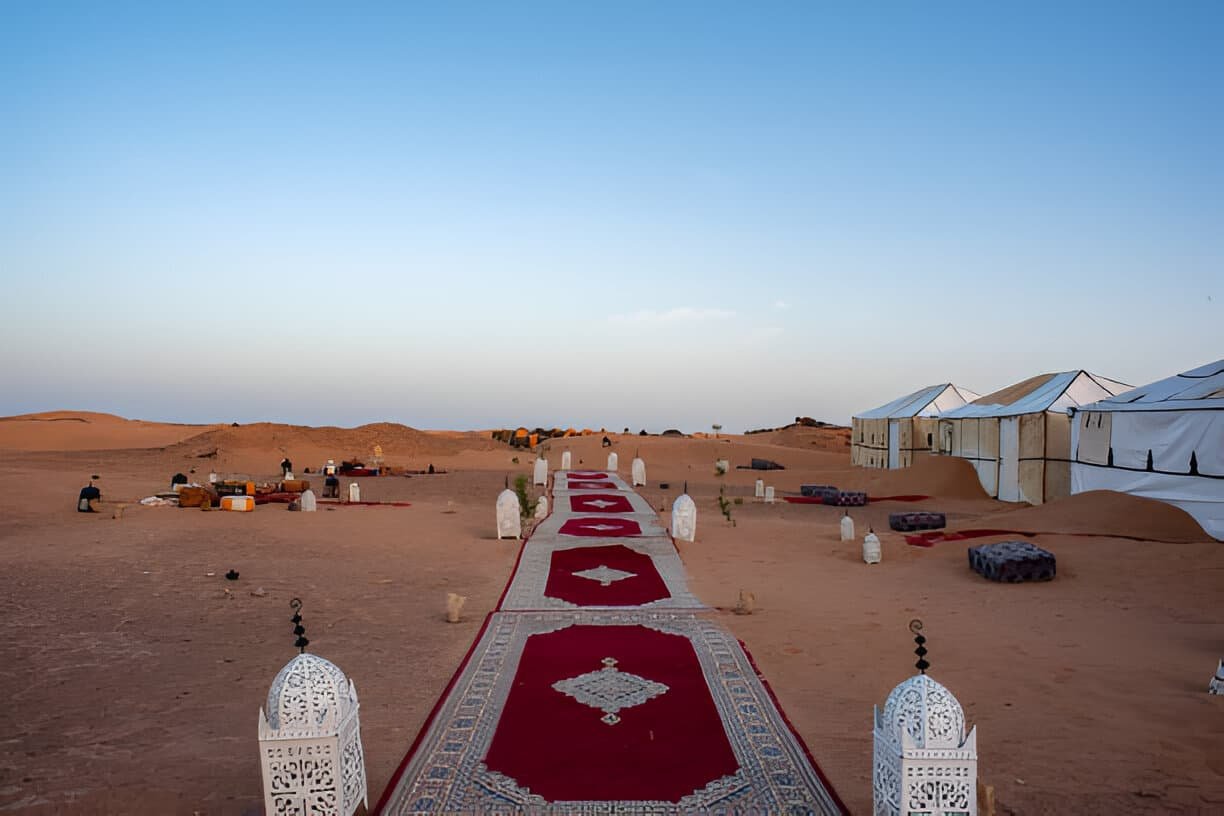
What to Pack for a Sahara Desert Tour in Morocco
Planning a Morocco desert trip? Discover exactly what to pack for a Sahara Desert tour, including clothing, footwear, sun protection, toiletries, and camel-trek essentials.
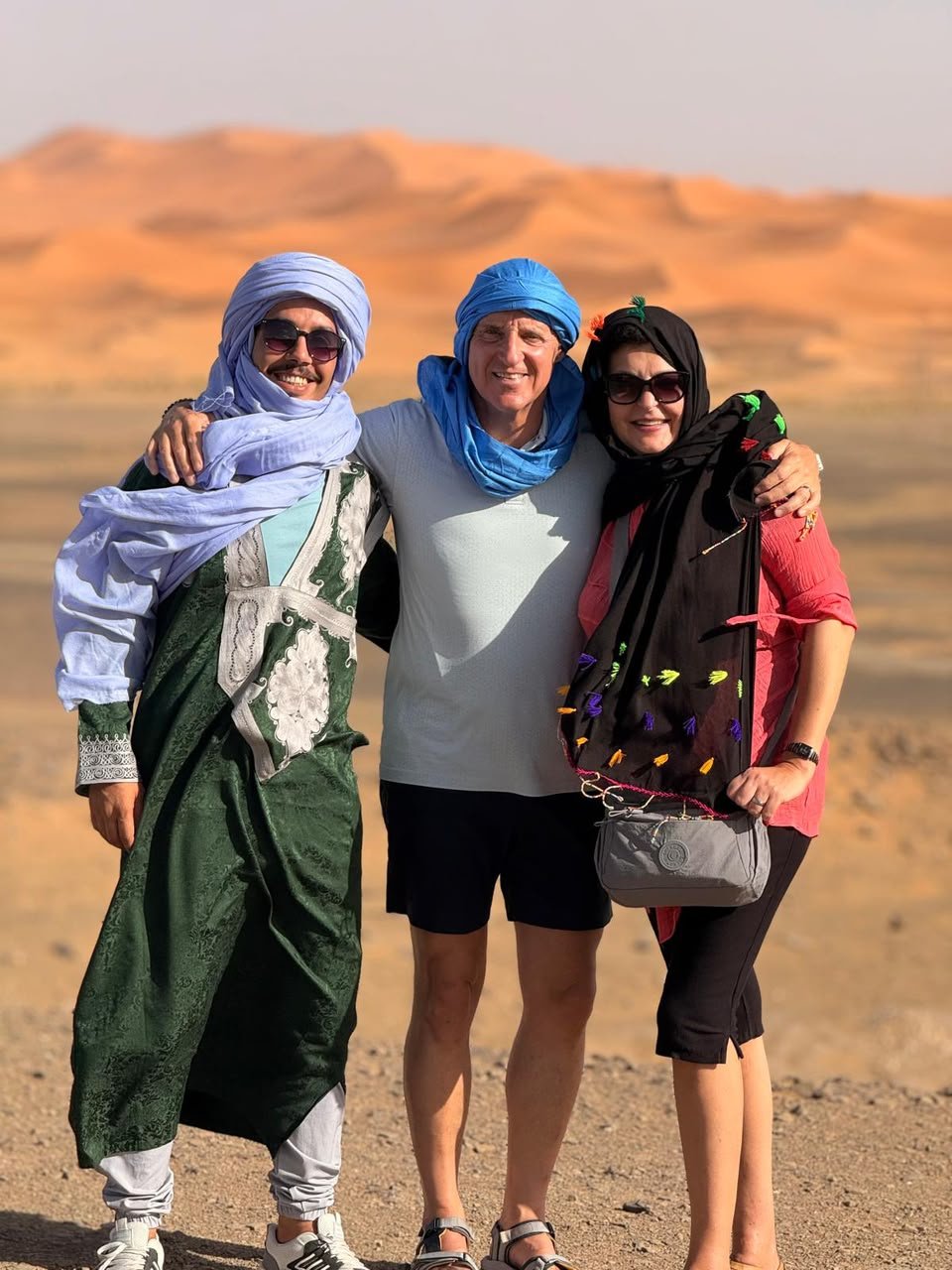
Understanding Moroccan Culture, Tipping, and Local Customs
Practical advice on dress etiquette, photography, haggling in souks, and tipping standards.