

Ouarzazate
Set between the High Atlas Mountains and the desert landscapes of southern Morocco, Ouarzazate is Morocco’s premier gateway to ancient earthen kasbahs, lush palm oases, and international cinema sets.
Why Go to Ouarzazate
Set between the High Atlas Mountains and the desert landscapes of southern Morocco, Ouarzazate is one of the country's principal gateways to the valleys, kasbahs and desert regions of the south. Its ochre architecture, stark mountain scenery and extraordinary light have also made it Morocco's best-known center for international film production. Morocco's National Tourism Office presents Ouarzazate and the surrounding region as a starting point for exploring the Great South, including the Dades and Drâa valleys and desert-edge landscapes.
Ouarzazate's cinematic reputation is not just a nickname. Atlas Studios, a few kilometers from the city center, remains an active production complex and visitor attraction. Its official site says sets used in productions including Gladiator, Prince of Persia and Game of Thrones can be seen on guided visits. As of August 2026, Atlas Studios lists admission at 80 MAD, or 110 MAD for the combined Atlas Studios and Kingdom of Heaven set visit, and states that it opens daily from 8:30 a.m. until sunset.
The region's greatest architectural attraction lies outside the city: the Ksar of Aït Ben Haddou, a UNESCO World Heritage Site. UNESCO describes it as an outstanding example of the traditional earthen architecture of southern Morocco, representing construction forms found in the Drâa, Todgha, Dadès and Souss valleys.
Back in Ouarzazate, Kasbah Taourirt provides another introduction to the earthen fortified architecture for which the south is famous. Together with nearby oases, film locations and the surrounding valleys, it makes Ouarzazate much more than simply an overnight stop on the way to the Sahara.
Best of Ouarzazate
Best Hotels in Ouarzazate
Ouarzazate has traditional guesthouses, kasbah-style hotels, ecolodges and conventional city hotels. These are established options rather than an official ranking:
Le Berbère Palace
An iconic luxury palace hotel in central Ouarzazate featuring traditional earthen architecture, expansive pools, and decor celebrating the city’s cinematic heritage.
Hôtel Riad Dar Daïf
An authentic eco-friendly riad on the edge of the palm grove overlooking Lake Mansour Eddahbi and the High Atlas peaks, renowned for traditional organic cuisine.
Le Petit Riad
A charming, family-run traditional boutique riad offering authentic Moroccan hospitality, a peaceful courtyard pool, and home-cooked Berber dinners.
Amanar Hôtel & Spa Ouarzazate
A modern, comfortable hotel and spa retreat located in a quiet residential district with mountain views and relaxing wellness amenities.
Kasbah Tamsna
A stylish, tranquil kasbah property set amidst lush gardens on the outskirts of Ouarzazate, pairing Berber craft styling with relaxing outdoor terraces.
Kasbah Zitoune
A peaceful kasbah-style guesthouse nestled in an olive grove near the road to Skoura, offering mountain panoramas and personal service.
Ecolodge L'île de Ouarzazate
A sustainable nature lodge situated along the shores of El Mansour Eddahbi lake, ideal for birdwatching, kayaking, and stargazing.
Ecolodge La Palmeraie Ouarzazate Maroc
A rustic-chic earthen ecolodge built with traditional clay and straw techniques within the tranquil Tabounte palm oasis.
Côté Sud Guest House
A welcoming boutique guest house in a quiet neighborhood featuring a refreshing swimming pool and home-cooked Moroccan dinners.
ibis Ouarzazate Centre
A dependable, centrally located modern city hotel providing straightforward comfort, a swimming pool, and easy access to Kasbah Taourirt.
Best Things to Do in Ouarzazate
Morocco's tourism authority specifically highlights the Cinema Museum, Dades Valley and the broader routes through the region's kasbahs, valleys and desert landscapes.
Explore Kasbah Taourirt
Tour the labyrinthine mud-brick chambers, decorated towers, and historic Glaoui palace halls of this monumental 19th-century fortress in central Ouarzazate.
Tour Atlas Studios
Walk through monumental desert sets used in world-famous blockbusters including Gladiator, Kingdom of Heaven, Prince of Persia, and Game of Thrones.
Visit the UNESCO-listed Ksar of Aït Ben Haddou
Cross the riverbed to explore the towering red earthen ramparts, fortified kasbahs, and hilltop granary of Morocco’s most famous UNESCO World Heritage ksar.
Discover Ouarzazate's Cinema Museum if it is open during your visit
Located opposite Kasbah Taourirt, explore vintage filming equipment, temple set pieces, costumes, and movie memorabilia from international film productions.
Take an excursion to the palm-filled Fint Oasis
Journey into a hidden green river valley surrounded by dramatic volcanic rock canyons, traditional clay villages, and tranquil date palm groves.
Visit Kasbah Tifoultoute
Explore this dramatic cliffside fortress perched above the Oued Ouarzazate, once a Glaoui stronghold and later a filming location for Lawrence of Arabia.
Explore Skoura and the wider Route of the Kasbahs
Wander the expansive 17th-century palm grove of Skoura, home to historic earthen structures like Kasbah Amridil along the famed Thousand Kasbahs highway.
Take a day trip toward the Dades Valley
Travel east into dramatic limestone canyons, scenic hairpin mountain passes, and the famous eroded rock formations of the Valley of the Roses and Dades.
Travel south toward Agdz and the Drâa Valley
Cross the rugged volcanic Anti-Atlas mountains at Tizi n’Tinififft to gaze out over millions of date palms lining the lush Drâa River ribbon.
Enjoy the desert-edge scenery and High Atlas landscapes around the city
Experience the remarkable clear desert light, golden hour mountain reflections, and vast horizon vistas that have drawn filmmakers for over a century.
Ouarzazate Travel Tips
Best Months to Visit
For most travelers, March through May and October through November provide the best conditions for sightseeing. Spring and autumn are warm enough for outdoor exploration without the extreme daytime temperatures common in midsummer. Historical climate averages show highs around 73°F (23°C) in March, 81°F (27°C) in April and 82°F (28°C) in October.
Summer is intensely hot. Average highs reach approximately 97°F (36°C) in June, 102°F (39°C) in July and 100°F (38°C) in August. Sightseeing in exposed kasbahs and film sets is therefore much more comfortable early in the morning or later in the afternoon.
Winter days can be sunny and pleasant, but temperatures fall sharply at night. January averages approximately 63°F (17°C) during the day and 36°F (2°C) at night, so warm layers are important even though Ouarzazate is associated with the desert. Check our guide on the Best Time to Visit Morocco for comprehensive seasonal recommendations.
Weather in Ouarzazate
Average Temperature (°F)
Monthly average high and low daytime temperatures in Ouarzazate.
Average Precipitation (in)
Historical average monthly rainfall in inches across the year.
| Month | Average High (°F) | Average Low (°F) | Precipitation (in) |
|---|---|---|---|
| Jan | 63° | 36° | 0.26 in |
| Feb | 68° | 41° | 0.69 in |
| Mar | 73° | 48° | 0.5 in |
| Apr | 81° | 54° | 0.35 in |
| May | 88° | 61° | 0.28 in |
| Jun | 97° | 68° | 0.28 in |
| Jul | 102° | 73° | 0.15 in |
| Aug | 100° | 72° | 0.41 in |
| Sep | 91° | 64° | 0.79 in |
| Oct | 82° | 57° | 0.6 in |
| Nov | 72° | 46° | 0.33 in |
| Dec | 64° | 39° | 0.46 in |
What You Need to Know
- Prepare for strong sun and dry air. Sunscreen, sunglasses, a hat and drinking water are essential when exploring exposed kasbahs and film locations.
- Bring layers outside summer. Winter nights can approach freezing even when afternoons feel pleasantly warm. Review our Packing List for Morocco for layered clothing recommendations.
- Allow more than one day if possible. Ouarzazate itself can be explored relatively quickly, but Aït Ben Haddou, Fint Oasis and the surrounding valleys make the region worth a longer stay. Check our guide on How Many Days Do You Need in Morocco?
- Check film-studio access before visiting. Atlas Studios remains an active production facility, and the official visitor information warns that tour routes can change when filming is taking place.
- Carry Moroccan dirhams. Morocco's official currency is the dirham, and smaller establishments may operate mainly with cash.
- Do not assume Ouarzazate is the Sahara dunes. The city sits in an arid, desert-edge landscape, but the famous high dune fields such as Erg Chebbi in Merzouga are considerably farther east.
How to Save Money in Ouarzazate
- Use coaches rather than private transfers. CTM operates a broad intercity coach network and lists Ouarzazate as a destination, while Supratours provides coach continuations for Moroccan destinations not served by rail.
- Stay in a guesthouse rather than a large hotel. Ouarzazate has numerous smaller riads, kasbahs and ecolodges.
- Combine nearby attractions. Kasbah Taourirt and the cinema-related sights can be grouped into one city day, leaving another day for Aït Ben Haddou or an oasis excursion.
- Eat at local restaurants. Simple tagines, couscous and grilled dishes generally cost less than meals at large hotels.
- Compare shared tours before booking a private 4x4. Ouarzazate is a major departure point for excursions along the Route of the Kasbahs, Dades and Drâa valleys.
Culture & Customs
Ouarzazate sits in a part of southern Morocco where Amazigh heritage, oasis culture and earthen architecture remain important elements of local identity. Traditional ksour and kasbahs throughout the region reflect forms of communal and fortified settlement developed in the valleys south of the High Atlas; UNESCO identifies Aït Ben Haddou as an especially important surviving example.
At the same time, Ouarzazate has developed a distinctive modern identity around cinema. International directors and productions have repeatedly used the region's landscapes and studio infrastructure, and Morocco's tourism office explicitly promotes Ouarzazate as the country's “Hollywood of Africa.”
Morocco's official languages are Arabic and Amazigh, while French is also widely spoken and understood. Darija, Moroccan Arabic, is commonly used in everyday speech. Useful expressions include “Salam” for hello, “Chokran” for thank you and “Beslama” for goodbye.
Visitors should ask before photographing people, particularly in villages and traditional communities. Relatively modest clothing is respectful outside resort environments, and during Ramadan many residents fast between dawn and sunset, which can alter restaurant and business schedules.
What to Eat
Ouarzazate is a good place to experience the hearty cooking of southern Morocco. Morocco's tourism authority specifically highlights Berber couscous among the signature experiences of the wider Ouarzazate–Zagora–Tinghir region.
You should also look for classic Moroccan dishes such as:
- Tagine, slowly cooked with meat, vegetables, olives, dried fruit or preserved lemon
- Couscous, traditionally prepared with vegetables and meat
- Harira, a tomato-based soup with legumes and spices
- Brochettes, grilled meat skewers
- Moroccan salads
- Fresh dates and dried fruits
- Moroccan bread
- Mint tea
Couscous, tagine, pastilla, mrouzia and r'fissa are among the dishes identified by Morocco's tourism office as emblematic of the country's culinary heritage, which combines Amazigh, Arab-Andalusian and Jewish influences.
On longer trips through the surrounding south, meals in guesthouses and kasbahs can be particularly memorable because many are prepared as slow, communal meals rather than quick restaurant service.
Safety
Ouarzazate generally requires the same ordinary precautions as elsewhere in Morocco, but heat, dehydration, road travel and remoteness become especially important when exploring outside the city.
Carry plenty of water on excursions, avoid long periods of direct sun during extreme summer heat and do not head far into isolated desert or mountain areas without suitable transport and preparation. Historical climate averages put July daytime highs around 102°F (39°C).
Road journeys through the High Atlas and southern valleys can be long and winding. Travelers using rental cars should avoid rushing itineraries and should check road and weather conditions before setting out, particularly on mountain routes.
The U.S. State Department currently places Morocco at Level 2: Exercise Increased Caution due to terrorism and advises travelers to remain alert in tourist areas and avoid demonstrations and crowds. The advisory itself dates from April 21, 2025, while the broader Morocco travel guidance was updated on August 13, 2026.
Medical assistance can also take longer to reach travelers in remote parts of Morocco, so travel insurance with appropriate medical coverage is sensible for extensive desert or mountain excursions.
Getting Around Ouarzazate
Central Ouarzazate can be explored with a combination of walking and taxis, but a vehicle becomes much more useful for attractions outside town.
For excursions to Aït Ben Haddou, Fint Oasis, Skoura, the Dades Valley or the Drâa Valley, travelers generally use rental cars, private drivers, shared tours or organized 4x4 trips. Morocco's tourism authority promotes Ouarzazate as a departure point for routes through the Dades and Drâa valleys and the wider Route of the Kasbahs.
Ouarzazate is not served by Morocco's passenger railway network, so overland public transport relies heavily on coaches. Supratours specifically operates bus connections to destinations not reached by trains, while CTM's national coach network includes Ouarzazate.
Travelers arriving by air use Ouarzazate Airport. Morocco's national airport authority lists taxi service, currency exchange, internet, medical assistance, cafés, shops and car rental among the airport's facilities.
For travelers coming from Marrakech, the road crosses the High Atlas over the spectacular Tizi n’Tichka pass. The journey itself is scenic but should be treated as a substantial travel day rather than a quick transfer. Onward routes can also connect north toward Fès via the Middle Atlas.
Entry & Exit Requirements
Ouarzazate follows the same immigration requirements as the rest of Morocco.
For U.S. citizens, current State Department guidance says no tourist visa is required for visits of 90 days or less. It also states that travelers should have at least six months of passport validity at the time of entry and one blank page available for an entry stamp.
Travelers who remain in Morocco beyond 90 days without arranging an extension may need to appear before a judge before departing and may have to pay a fine.
Travelers with passports from other countries should check Morocco's rules for their specific nationality. Entry and visa requirements can change, so they should be reconfirmed with an official Moroccan government or consular source before travel.
Guided Tours Visiting Ouarzazate
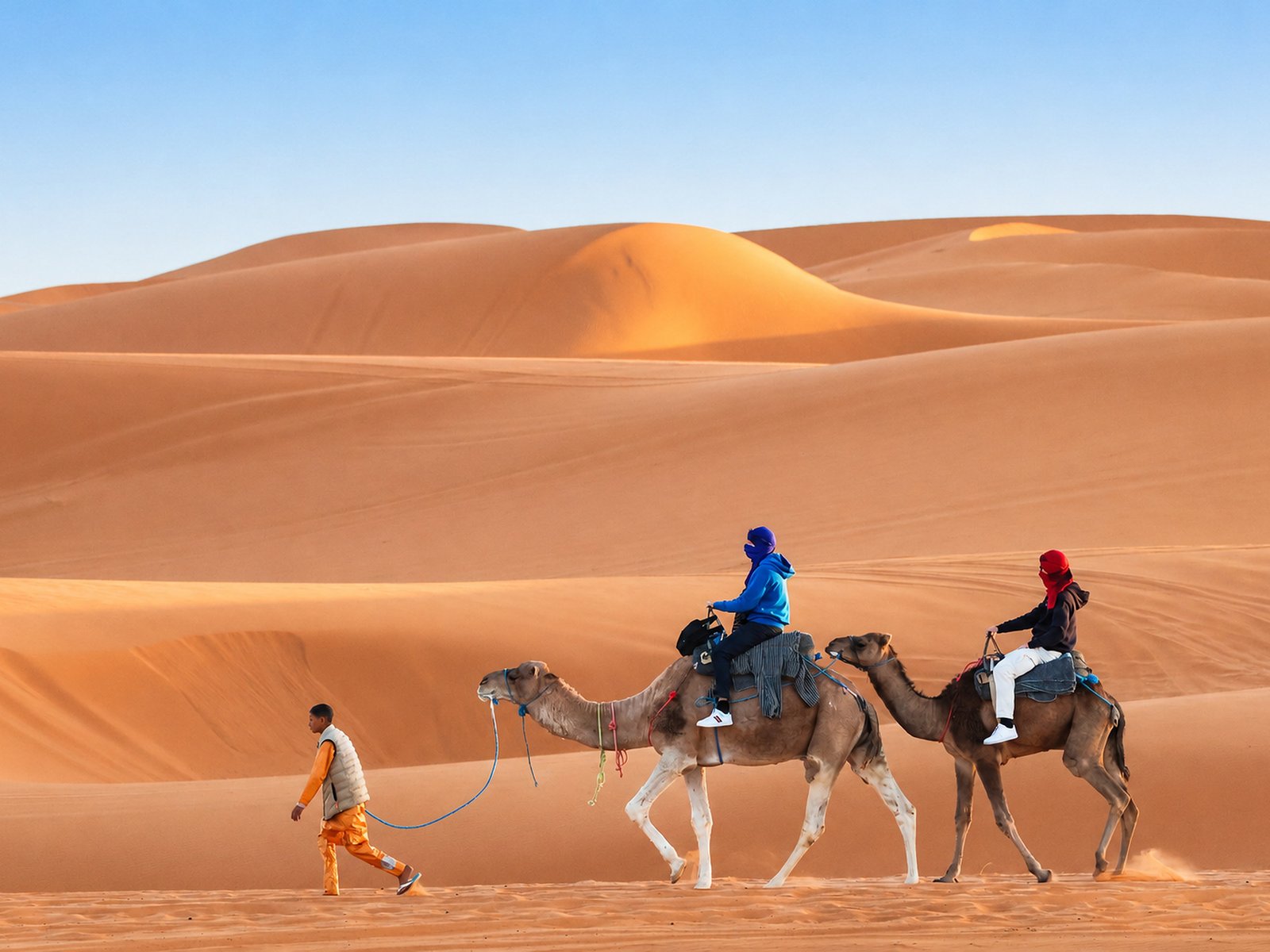
3-Day Marrakech to Merzouga Guided Desert Tour
Cross the High Atlas Mountains, explore ancient kasbahs, and sleep under the Saharan stars.
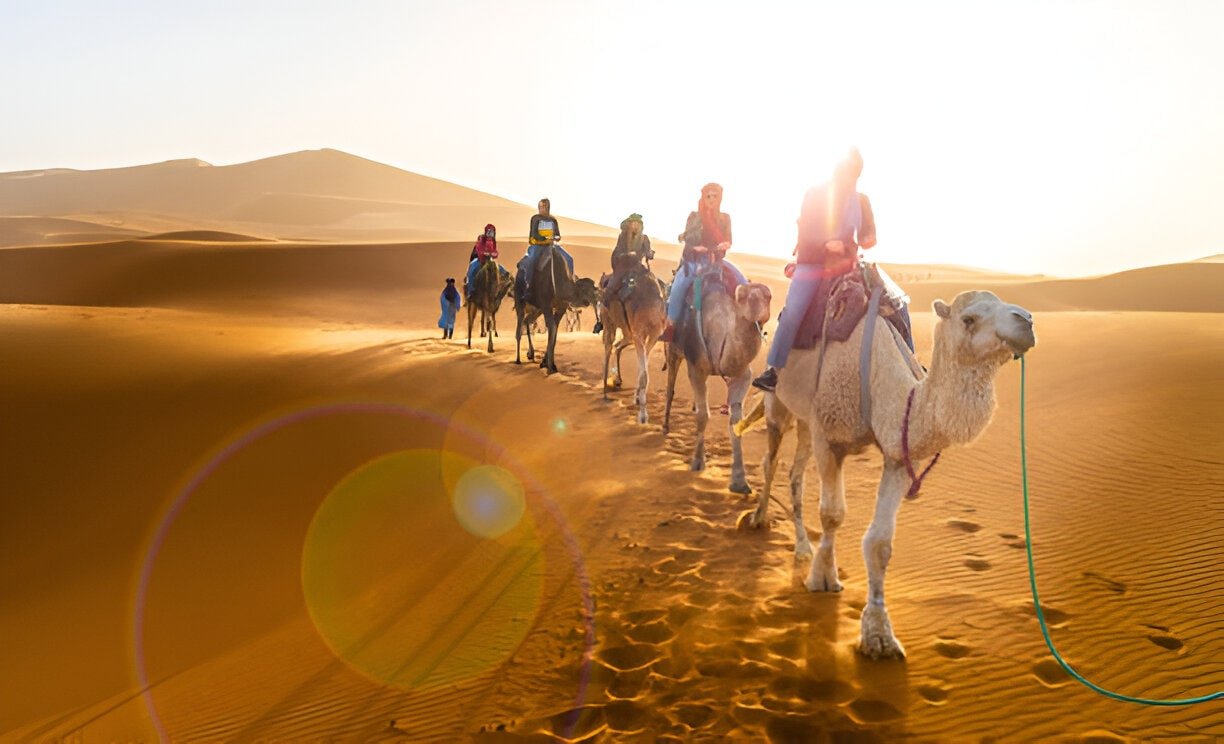
5-Day Marrakech to Fes Guided Desert Expedition
A 5-day one-way desert expedition from Marrakech to Fes through Ait Ben Haddou, Dades, Todra Gorge, and Erg Chebbi with two desert camp nights.
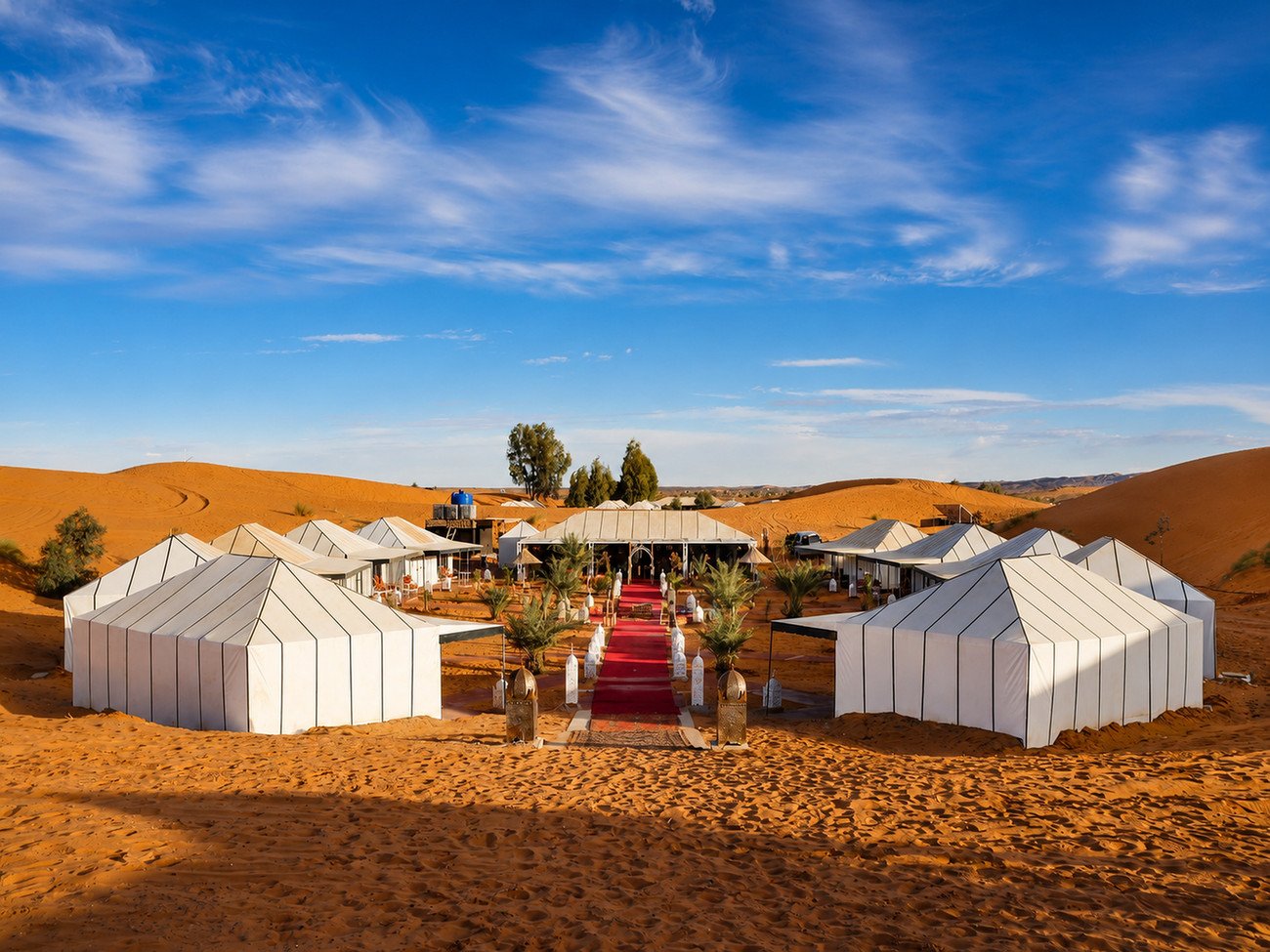
4-Day Luxury Guided Sahara Desert Experience
A 4-day luxury Sahara desert roundtrip journey from Marrakech featuring boutique kasbahs, two nights in an Erg Chebbi camp, and a scenic Draa Valley return.
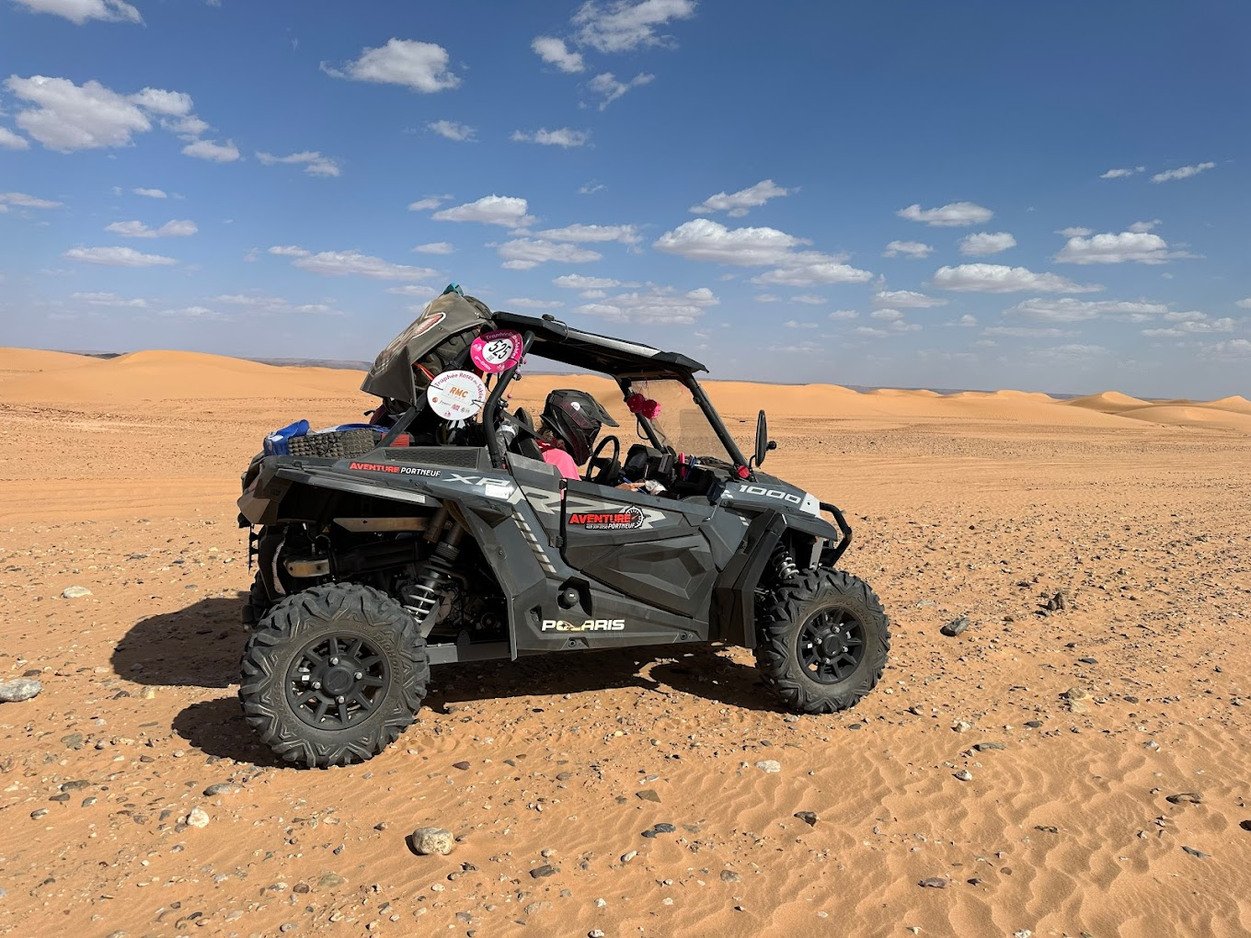
6-Day Morocco Family Guided Adventure Tour
A guided 6-day family adventure from Marrakech combining sunrise hot-air ballooning, Atlas Mountains hiking, Todra Gorge rock climbing, Sahara camel trekking, luxury desert camping, and UNESCO kasbahs.

14-Day Ultimate Morocco Guided Grand Discovery
An extraordinary 14-day guided grand journey from Tangier to Marrakech via Chefchaouen, Fes, Merzouga Sahara, Ait Ben Haddou, and Essaouira.
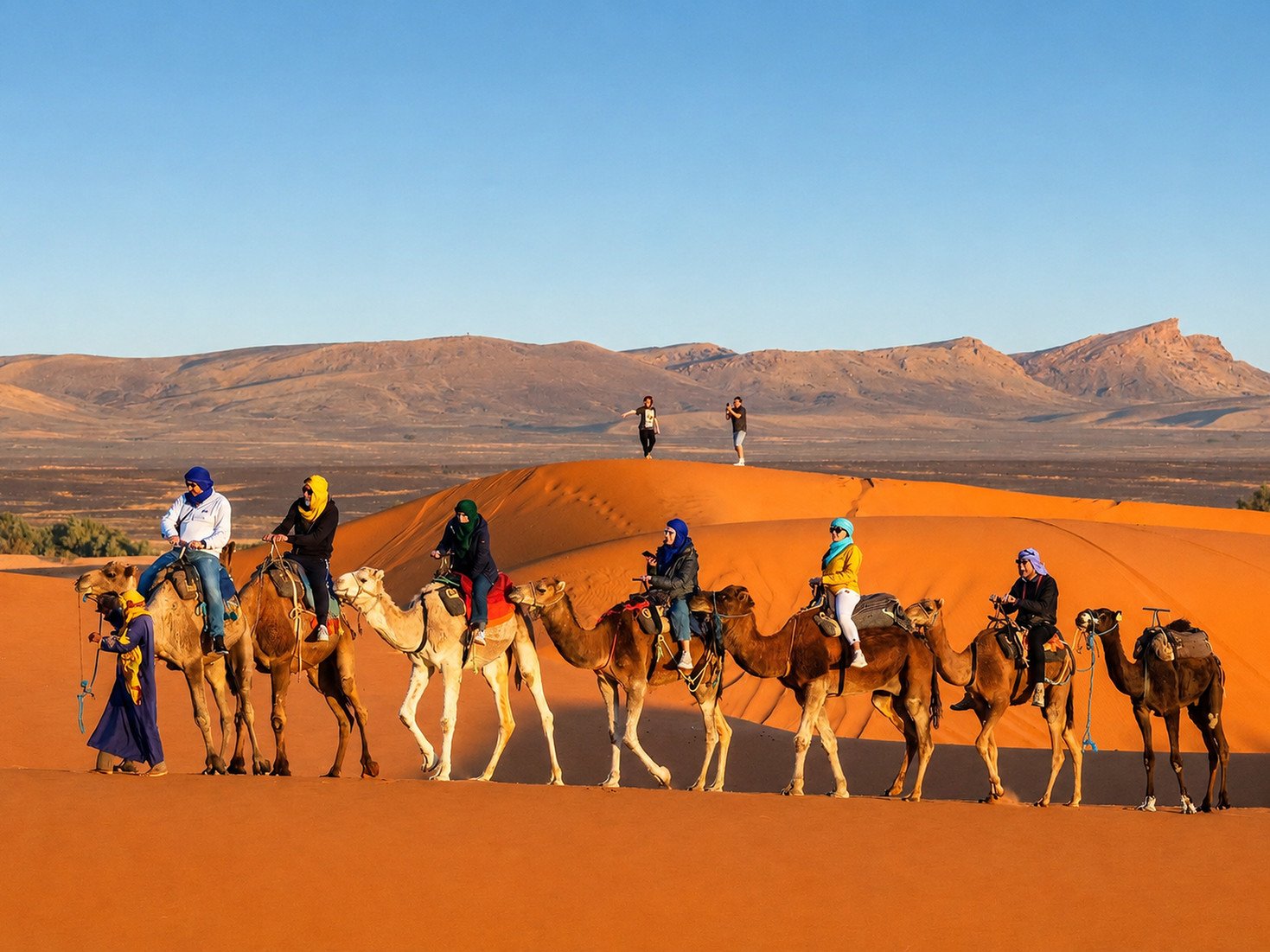
Marrakech & Southern Morocco Guided Tour: Ouarzazate, Merzouga & Zagora
Cross mountain passes, kasbah country, palm-filled valleys, and the dunes of the Sahara.
Plan Your Ouarzazate Journey
Experience the Ksar of Aït Ben Haddou, Atlas Studios, Kasbah Taourirt, Fint Oasis, and seamless private guided journeys across Morocco.