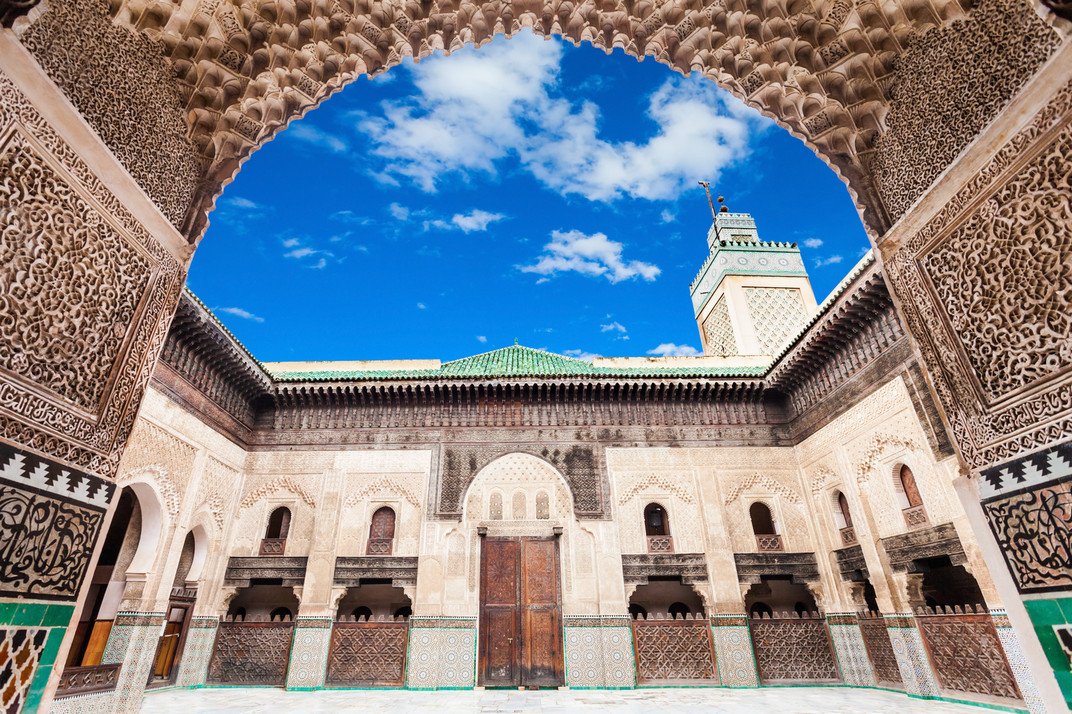
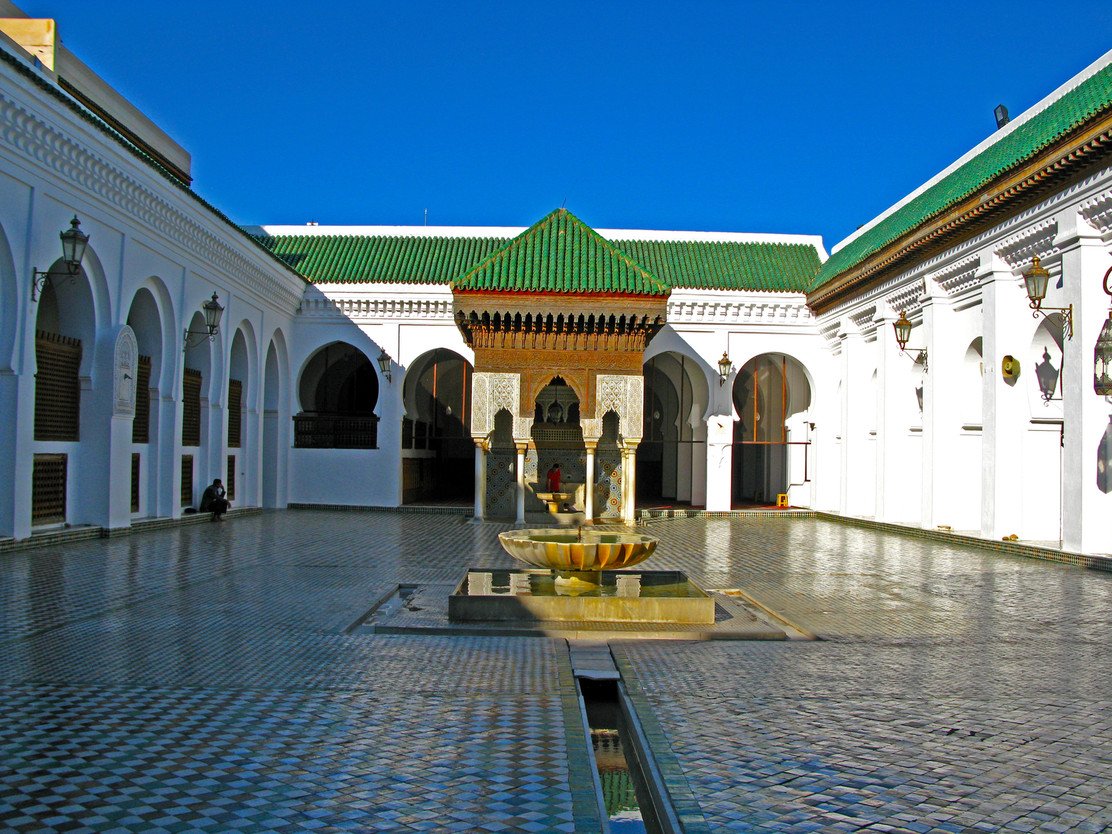
Why Go to Tangier
At Morocco's northern edge, Tangier occupies a remarkable position where the Mediterranean and Atlantic meet near the Strait of Gibraltar. Whitewashed buildings climb the hills above the water, while the medina, Kasbah, cafés and coastal roads reflect the city's long-standing multicultural character. Morocco's National Tourism Office emphasizes Tangier's mix of Moroccan and Spanish influences and its setting between two seas.
Tangier has long attracted artists and writers, and its atmosphere remains quite different from Morocco's inland imperial cities. The historic core combines the Kasbah, medina and Grand Socco with views toward the strait. The former Sultan's Palace inside the Kasbah now houses a museum devoted to Moroccan arts.
Outside the center, the coastline becomes an attraction in its own right. Cap Spartel, the beaches west of the city and the Caves of Hercules provide an easy contrast to medina sightseeing. Morocco's tourism authority lists the Kasbah, Hercules Caves, Cape Spartel Beach and Mendoubia Gardens among Tangier's most popular attractions.
Tangier is also one of Morocco's easiest cities to combine with the rest of the country thanks to its airport and Al Boraq high-speed railway, which links it directly with Kenitra, Rabat and Casablanca.
Best of Tangier
Best Places to Stay in Tangier
Tangier offers historic hotels, modern international properties, seafront resorts and intimate houses inside the Kasbah and medina. These are established options rather than an official ranking:
An iconic historic hotel with Arabo-Moorish architecture, lush gardens, and legendary literary heritage near the medina.
A celebrated historic property overlooking the medina and bay, famous as Henri Matisse’s residence where he painted masterworks.
A contemporary beachfront hotel along the corniche offering panoramic Mediterranean views, modern comfort, and outdoor pools.
An upscale modern hotel integrated into the city center mall complex, conveniently located directly opposite the high-speed train station.
A luxury 5-star hotel offering expansive bay views, fine dining restaurants, a spa, and immediate access to the business district.
A boutique guesthouse nestled in the historic Kasbah with rooftop terrace vistas across the medina rooftops and Strait of Gibraltar.
A characterful restored palace inside the medina offering authentic Moroccan tilework, traditional hammam, and welcoming service.
An intimate luxury boutique riad in the Kasbah blending refined Moroccan craftsmanship with bespoke, artistic contemporary suites.
Tangier’s oldest traditional guesthouse, set against the 11th-century Kasbah ramparts with cliffside sea terraces and bohemian charm.
A full-service resort situated along the Malabata coastline with sweeping views of the bay and straightforward coastal road access.
For historic atmosphere, choose the Kasbah or medina. For easier access to the railway station, modern restaurants and the waterfront, the newer city and Malabata areas are more convenient.
Best Things to Do in Tangier
Explore the Kasbah and old Medina
Wander through hilltop fortified alleys, whitewashed lanes, ornate wooden doorways, and scenic viewpoints overlooking the Strait of Gibraltar.
Wander through Grand Socco
Experience the lively central square (Place du 9 Avril 1947) connecting the old medina with the modern city, framed by palm trees and bustling cafés.
Visit the Kasbah Museum
Step inside the former 17th-century Sultan’s Palace (Dar el-Makhzen) to discover Moroccan antiquities, mosaics, woodwork, and Andalusian gardens.
Visit the American Legation Museum
Explore the first American public property outside the United States, showcasing historic treaties, art collections, and literary archives.
Walk through Mendoubia Gardens
Stroll beneath century-old banyan trees, historic brass cannons, and shaded pathways directly adjoining Grand Socco.
Drive out to Cap Spartel
Visit the dramatic northernmost Atlantic-Mediterranean headland where two oceans meet, marked by a historic 1864 lighthouse and coastal cliffs.
Explore the Caves of Hercules
Marvel at legendary sea caves featuring a natural ocean-facing opening famously shaped like the reverse map of the African continent.
Walk along Tangier's waterfront and beach
Enjoy a leisurely stroll along the modern seaside corniche promenade, lined with palm trees, seaside cafés, and views of anchored ships.
Explore the cafés and architecture of the newer city
Sip coffee at iconic literary haunts like Café Hafa or Gran Café de Paris while admiring Art Deco and Spanish colonial boulevards.
Take a day trip to Asilah or Chefchaouen
Journey south to the artistic Atlantic ramparts of Asilah or inland through the Rif Mountains to the picturesque blue alleys of Chefchaouen.
The Moroccan National Tourism Office identifies the Kasbah, Grand Socco area, Hercules Caves, coastal attractions and Mendoubia Gardens among the city's principal experiences.
Tangier Travel Tips
Best Months to Visit
For most travelers, April through June and September through October provide particularly comfortable conditions. Spring is pleasantly warm without the strongest summer heat, while early autumn remains warm enough for coastal activities. Historical averages range from about 70°F (21°C) in April to 81°F (27°C) in September for daytime highs.
July and August are warm and very dry, with average highs around 84–86°F (29–30°C). Tangier's coastal setting keeps summer considerably milder than many inland Moroccan destinations.
Winter remains mild, but it is the wetter season. December is historically the wettest month in the cited climate data, while July and August receive very little rain.
Weather in Tangier
Average Temperature (°F)
Mild pleasant springs and autumns (70°F–81°F) with tempered maritime summers (84°F–86°F) and gentle coastal winters (63°F–64°F).
Average Precipitation (in)
Rainfall peaks in November and December (4.33 in – 4.48 in), with almost zero rainfall across July and August (0.07 in – 0.09 in).
| Month | Average High | Average Low | Precipitation |
|---|---|---|---|
| Jan | 63°F | 46°F | 3.33 in |
| Feb | 63°F | 48°F | 2.32 in |
| Mar | 66°F | 50°F | 2.68 in |
| Apr | 70°F | 54°F | 2.09 in |
| May | 75°F | 57°F | 1.35 in |
| Jun | 81°F | 63°F | 0.28 in |
| Jul | 84°F | 66°F | 0.07 in |
| Aug | 86°F | 68°F | 0.09 in |
| Sep | 81°F | 66°F | 0.78 in |
| Oct | 77°F | 61°F | 3.21 in |
| Nov | 68°F | 54°F | 4.33 in |
| Dec | 64°F | 50°F | 4.48 in |
These figures are based on weather observations from Tanger Aerodrome, about 7 km from Tangier, collected from 1992–2021. They are climate averages rather than forecasts.
What You Need to Know
- Spend time both inside and outside the medina. Tangier's appeal comes from the contrast between its historic core, newer neighborhoods and coastline.
- Bring comfortable walking shoes. The Kasbah and medina involve hills, steps and uneven lanes.
- Allow half a day for the western coast. Cap Spartel and Hercules Caves combine naturally in one excursion.
- Expect wind. Historical climate data show Tangier is consistently breezy, with March averaging the strongest winds in the cited dataset.
- Carry Moroccan dirhams. Morocco uses the dirham, and cash remains useful in traditional markets and smaller establishments.
- Ask before photographing people or sensitive sites. Current U.S. guidance specifically warns against photographing palaces, government buildings and other sensitive facilities without permission.
How to Save Money in Tangier
- Explore the medina on foot. The Kasbah, Grand Socco and much of the historic center can be combined without transportation.
- Use the train for longer intercity journeys. Al Boraq connects Tangier with Kenitra, Rabat and Casablanca.
- Stay in a traditional guesthouse. Smaller medina properties can be an alternative to large international hotels.
- Eat at neighborhood cafés. Traditional cafés and simple restaurants generally offer better-value meals than formal hotel dining.
- Use taxis selectively. They are particularly useful for Cap Spartel, Hercules Caves and neighborhoods outside walking distance; current U.S. guidance recommends registered taxis and asking drivers to use the meter.
Culture & Customs
Tangier's character has been shaped by its location between Europe, Africa, the Mediterranean and Atlantic. Morocco's tourism authority describes the city as having a distinctly multicultural heritage and specifically notes Spanish influence in its architecture and cultural history.
Its artistic reputation is also longstanding. The tourism office references painters Eugène Delacroix and Henri Matisse among the artists associated with Tangier and highlights historic landmarks such as the Gran Teatro Cervantes.
Arabic and Amazigh are Morocco's official languages, while Darija is commonly spoken. French is widely encountered, and Spanish has a more visible presence in northern Morocco than in many southern regions.
As elsewhere in Morocco, greetings matter. A simple “Salam” for hello and “Chokran” for thank you are useful. Relatively modest clothing is respectful around traditional and religious areas.
During Ramadan, many residents fast from dawn until sunset, and some restaurant, attraction and business hours may change.
What to Eat
Tangier's position on the water makes fish and seafood a natural part of the local dining experience. The city also offers the familiar staples of northern Moroccan cuisine.
Look for:
- Grilled fish and seafood
- Fish or vegetable tagine
- Couscous
- Harira
- Bissara, a broad-bean soup or purée commonly eaten in northern Morocco
- Brochettes
- Moroccan salads
- Fresh bread, olives and olive oil
- Moroccan pastries
- Mint tea
The medina is good for inexpensive traditional food, while the waterfront and newer city provide more contemporary restaurants and seafood-focused dining. Tangier's coastal and multicultural setting is a major part of its tourism identity.
Tangier is also a city where cafés matter. Sitting over coffee or mint tea while watching street life is part of the experience, particularly around the old city and central boulevards.
Safety
Tangier is one of Morocco's established major tourist areas, but normal big-city precautions remain important. Current U.S. travel guidance says petty crime is common in Moroccan tourist areas and major cities, particularly pickpocketing in crowded markets and on public transport. Keep phones, wallets and bags secure.
Avoid isolated beaches, poorly lit streets and unfamiliar areas alone late at night, and use registered taxis rather than unmarked vehicles.
As of August 2026, the U.S. State Department lists Morocco at Level 2: Exercise Increased Caution due to terrorism. The advisory recommends remaining alert in tourist locations and avoiding demonstrations and crowds.
Government travel advice can change, so travelers should check their own country's latest guidance shortly before departure.
Getting Around Tangier
The medina and Kasbah are best explored on foot. For the beach, Malabata, railway station, airport and coastal attractions farther west, taxis or other road transport become more useful.
Tangier is exceptionally well connected by Moroccan standards. Al Boraq links Tangier directly with Kenitra, Rabat Agdal and Casa Voyageurs. Morocco's tourism authority currently gives approximate high-speed journey times of 2 hours 10 minutes between Tangier and Casablanca, 1 hour 20 minutes between Tangier and Rabat, and 50 minutes between Tangier and Kenitra.
Air travelers use Tangier Ibn Battouta Airport (TNG). Morocco's airport authority lists taxis, currency exchange, internet, medical assistance, shops, restaurants and car rental among its passenger services.
Tangier is also an important maritime gateway. Tanger Med currently publishes passenger ferry departures for routes including Algeciras and Motril; travelers using ferries should check the exact port and current sailing schedule before departure.
For nearby destinations, Morocco's tourism authority gives approximate road distances of 63 km to Tétouan and 112 km to Chefchaouen, making both practical additions to a northern Morocco itinerary.
Entry & Exit Requirements
Tangier follows the same immigration requirements as the rest of Morocco.
For U.S. citizens, current State Department guidance says a tourist visa is not required for visits of 90 days or less. The passport must be valid at entry, with the same guidance specifying at least six months' validity at the time of entry and at least one blank page per stamp.
Travelers who remain in Morocco beyond 90 days without obtaining an extension may need to appear before a judge before departure and may be required to pay a fine.
Travelers using passports from other countries should check Morocco's requirements for their nationality. Visa and passport rules can change, so confirm them through an official government or Moroccan consular source shortly before travel.